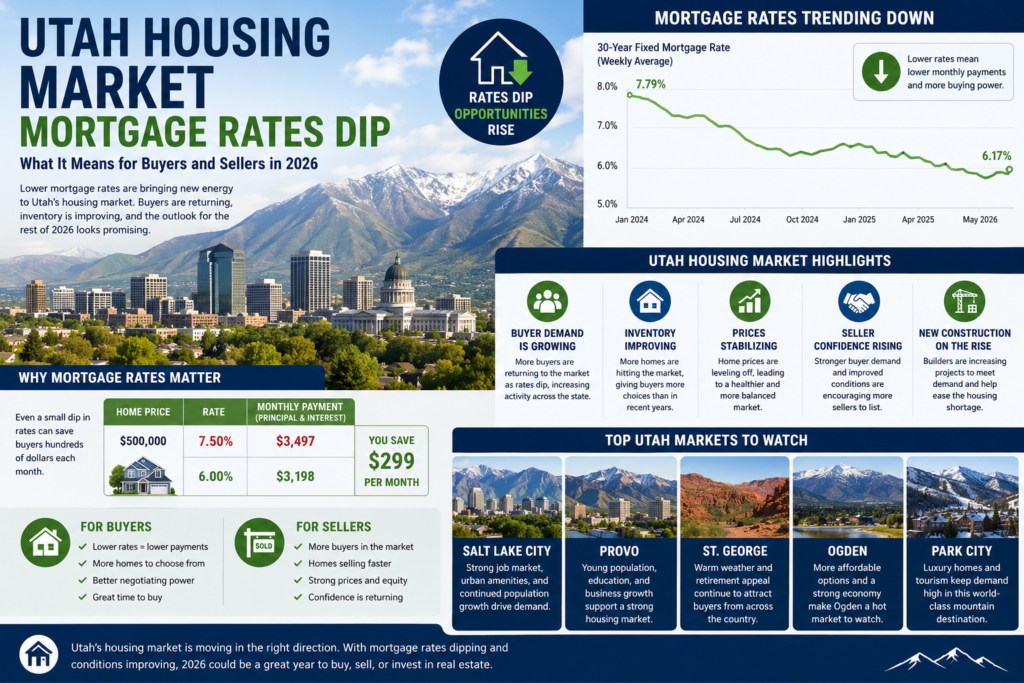
The Utah housing market has entered a new phase in 2026 as mortgage rates begin to dip after several years of elevated borrowing costs. For homebuyers, sellers, investors, and real estate professionals, this shift is creating renewed optimism across the state. From Salt Lake City to Provo, Ogden, and St. George, lower mortgage rates are helping revive buyer demand while reshaping pricing trends and market activity.
Utah has long been recognized as one of the fastest-growing housing markets in the United States. Strong job growth, a young population, expanding technology industries, and attractive outdoor lifestyles have kept housing demand high for years. However, when mortgage rates surged in 2023 and 2024, many buyers were priced out of the market. Sales slowed, affordability worsened, and sellers became cautious.
Now, with mortgage rates gradually easing in 2026, the housing market is showing signs of renewed momentum. Buyers are returning, inventory is improving, and many economists believe Utah could experience a healthier and more balanced housing environment moving forward.
Why Mortgage Rates Matter So Much
Mortgage rates are one of the most important factors influencing the housing market. Even a small reduction in rates can significantly lower monthly mortgage payments.
For example, a buyer financing a $500,000 home at a 7.5% mortgage rate pays substantially more per month than someone borrowing at 6.0%. When rates decline, affordability improves immediately. Buyers gain purchasing power, and more people qualify for loans.
This is particularly important in Utah because home prices have risen dramatically over the last decade. In cities like Salt Lake City and Provo, home values climbed rapidly during the pandemic-era housing boom. Many families struggled to keep pace with both rising prices and high interest rates.
The recent mortgage rate dip is helping ease some of that financial pressure.
Utah’s Housing Market Remains Resilient
Despite national concerns about a potential housing slowdown, Utah’s market has remained relatively resilient compared to many other states. Several key factors continue to support housing demand:
- Strong population growth
- Expanding technology and healthcare industries
- Low unemployment rates
- High quality of life
- Demand from remote workers relocating from expensive states
Cities along Utah’s Wasatch Front remain especially attractive to professionals and young families. Communities near outdoor recreation areas are also seeing ongoing demand from buyers seeking lifestyle-oriented living.
The state’s economy has also remained relatively healthy. Major employers in technology, finance, education, and healthcare continue hiring, which supports long-term housing stability.
Buyers Are Returning to the Market
As mortgage rates dip, many buyers who paused their home search in recent years are reentering the market. This includes:
- First-time homebuyers
- Move-up buyers
- Investors
- Relocating professionals
- Retirees seeking lower-cost living
Real estate agents across Utah are reporting increased inquiries, more home tours, and stronger buyer competition in desirable neighborhoods.
The return of buyers is especially noticeable during the spring and summer homebuying seasons, when families prefer to move before the new school year begins.
In areas such as St. George and Ogden, lower borrowing costs are helping revive demand for both single-family homes and condominiums.
Sellers Are Becoming More Confident
When mortgage rates were high, many homeowners delayed selling because they did not want to give up ultra-low mortgage rates obtained during previous years. This phenomenon, often called the “lock-in effect,” reduced housing inventory and limited market activity.
Now that rates are slowly declining, more homeowners are beginning to list their properties.
Sellers are recognizing that:
- Buyer demand is improving
- Homes are spending less time on the market
- Multiple offers are returning in some areas
- Property values remain relatively strong
This increase in listings is helping create a more balanced market environment.
Inventory Levels Are Improving
One of Utah’s biggest housing challenges has been limited inventory. For years, there were simply not enough homes available to meet growing demand.
The mortgage rate dip is helping improve inventory in several ways:
- More sellers are entering the market
- Builders are increasing construction activity
- Buyers have more financing flexibility
- Investors are reengaging with residential real estate
Although inventory remains below historical averages in many regions, conditions are improving compared to the severe shortages seen during the pandemic-era housing surge.
New construction communities around Lehi and Herriman continue attracting buyers seeking newer homes with modern amenities.
Home Prices Are Stabilizing
Utah experienced massive home price growth between 2020 and 2022. While prices have not collapsed, the pace of appreciation has slowed considerably.
Lower mortgage rates are helping stabilize prices rather than causing dramatic declines. In most Utah markets, experts expect moderate appreciation rather than explosive growth.
This stabilization benefits both buyers and sellers:
- Buyers avoid bidding wars seen during previous years
- Sellers still maintain strong equity positions
- Appraisal risks decline
- Market conditions become more predictable
A balanced market is generally healthier for long-term economic stability.
First-Time Buyers Gain New Opportunities
First-time buyers were among the hardest hit by rising mortgage rates and home prices. Many struggled to save for down payments while facing rising rents and inflation.
The recent mortgage rate dip is creating new opportunities for younger buyers entering the market.
Benefits include:
- Lower monthly mortgage payments
- Improved loan qualification chances
- Greater affordability
- Increased housing inventory
- More negotiating power
Some lenders are also offering specialized programs for first-time buyers, including reduced down payment options and closing cost assistance.
In university-centered communities such as Logan, younger professionals are once again exploring homeownership instead of renting long term.
Utah’s Tech Sector Continues Driving Demand
Utah’s growing technology industry remains a major driver of housing demand. Often referred to as the “Silicon Slopes” region, the state has attracted numerous startups and established technology companies.
Areas around Lehi have become technology hubs, drawing workers from across the country.
The tech sector contributes to housing demand by:
- Bringing high-income professionals into the market
- Supporting population growth
- Increasing household formation
- Encouraging business expansion
- Strengthening local economies
As mortgage rates decline, many technology workers who delayed buying homes are returning to the market.
Luxury Housing Markets Are Seeing Renewed Interest
Luxury real estate in Utah is also benefiting from lower mortgage rates. High-end buyers in resort-style communities and mountain towns are becoming more active.
Popular luxury destinations include:
- Park City
- Moab
- Heber City
These markets attract wealthy buyers seeking second homes, vacation properties, and investment opportunities.
Outdoor recreation, skiing, hiking, and lifestyle appeal continue supporting demand in these premium housing areas.
Rental Markets Remain Competitive
Even with improving affordability, Utah’s rental market remains competitive in many cities.
Rents remain elevated because:
- Population growth continues
- Housing shortages still exist
- Construction costs remain high
- Demand from students and young professionals persists
However, if mortgage rates continue declining, some renters may transition into homeownership, which could gradually ease rental pressure.
Multifamily housing development is also expanding in several urban areas to meet growing demand.
Challenges Still Facing the Utah Housing Market
Although the mortgage rate dip is positive news, challenges remain.
Affordability Concerns
Even with lower rates, home prices remain high relative to incomes in many areas. Affordability continues to be a major issue for middle-income families.
Construction Costs
Builders still face high material costs, labor shortages, and zoning restrictions that can slow new housing development.
Population Growth Pressure
Utah’s fast-growing population continues placing pressure on housing supply and infrastructure.
Economic Uncertainty
Broader national economic uncertainty, inflation concerns, and Federal Reserve policies could still influence future mortgage rate movements.
What Experts Predict for the Rest of 2026
Housing analysts generally expect Utah’s market to remain active throughout the remainder of 2026.
Key predictions include:
- Continued moderate mortgage rate declines
- Gradual increase in housing inventory
- Stable or moderately rising home prices
- Strong demand in desirable suburban areas
- Increased activity among first-time buyers
Most economists do not currently expect a major housing crash in Utah. Instead, they anticipate a transition toward a healthier and more balanced market.
Best Utah Markets to Watch
Several Utah cities and regions are expected to remain especially active as mortgage rates ease.
Salt Lake City
As Utah’s largest metropolitan area, Salt Lake City continues attracting professionals, families, and investors. Strong employment opportunities and urban amenities support long-term housing demand.
Provo
Provo benefits from a young population, educational institutions, and expanding business development.
St. George
Known for warm weather and retirement appeal, St. George remains popular among retirees and remote workers.
Ogden
Ogden offers relatively more affordable housing options compared to some larger Utah cities.
Park City
Luxury real estate and tourism continue supporting strong demand in Park City.
Tips for Buyers Entering the Market
Homebuyers considering Utah real estate in 2026 should keep several strategies in mind:
- Get pre-approved before shopping
- Compare mortgage lenders carefully
- Monitor interest rate trends
- Be prepared for competition in popular areas
- Consider emerging suburban markets
- Evaluate long-term affordability
Working with experienced real estate professionals can also help buyers navigate changing market conditions.
Advice for Sellers
Sellers can benefit from improved market activity, but pricing strategy remains important.
Key recommendations include:
- Price homes realistically
- Invest in staging and curb appeal
- Be flexible during negotiations
- Understand local market trends
- Prepare for inspections and appraisals
Well-presented homes in desirable neighborhoods continue attracting strong buyer interest.
The Long-Term Outlook for Utah Real Estate
Utah’s long-term housing outlook remains relatively positive due to powerful demographic and economic trends.
Key strengths include:
- Population growth
- Strong job creation
- Expanding industries
- High quality of life
- Outdoor recreation appeal
- Business-friendly environment
While market cycles will continue, Utah remains one of the most attractive housing markets in the western United States.
Conclusion
The Utah housing market is gaining renewed energy as mortgage rates dip in 2026. Lower borrowing costs are bringing buyers back into the market, improving seller confidence, and helping stabilize housing conditions across the state.
Although affordability challenges remain, the overall market appears healthier and more balanced than during the extreme highs and lows of recent years. Buyers now have more opportunities, sellers are seeing renewed demand, and inventory levels are gradually improving.
From Salt Lake City to St. George and Park City, Utah continues attracting residents who value economic opportunity, natural beauty, and lifestyle advantages.
If mortgage rates continue easing and economic conditions remain stable, Utah’s housing market could experience sustained growth and increased activity throughout the rest of 2026 and beyond.