Marketing in 2025 has evolved far beyond traditional advertising. Brands are no longer focused only on selling products; they are creating experiences, emotional connections, and interactive campaigns that encourage people to participate. The rise of artificial intelligence, short-form video, personalized content, and social media trends has completely changed the marketing landscape.
Today’s most successful campaigns combine creativity with technology. They focus on storytelling, community engagement, and authentic brand messaging rather than simple promotional tactics. Companies that understand how modern audiences behave online are the ones gaining the most attention.
From AI-powered experiences to viral TikTok campaigns, many brands launched highly innovative marketing strategies in 2025 that captured global interest. These campaigns demonstrate how businesses can connect with consumers in meaningful and memorable ways.
Why Marketing Campaigns Changed in 2025
Consumer behavior has shifted dramatically over the past few years. People are exposed to thousands of advertisements daily, making it harder for brands to capture attention. Traditional ads are often skipped, ignored, or forgotten within seconds.
As a result, companies now focus on creating campaigns that:
- Feel interactive rather than promotional
- Encourage sharing on social media
- Use personalization and AI technology
- Connect emotionally with audiences
- Reflect cultural trends and values
Modern consumers also value authenticity. They prefer brands that feel human, relatable, and socially aware. This is why campaigns built around real stories, humor, or community participation often perform better than overly polished advertisements.
Another major change is the dominance of platforms like TikTok, Instagram Reels, and YouTube Shorts. Marketing campaigns now need to work in fast-moving digital environments where trends change quickly.
The Rise of AI-Powered Marketing
Artificial intelligence became one of the biggest marketing tools in 2025. Brands began using AI to personalize customer experiences, generate content, and create interactive campaigns.
AI-powered marketing allows companies to:
- Customize advertisements for individual users
- Create dynamic visuals and videos
- Improve customer engagement
- Analyze consumer behavior
- Deliver personalized recommendations
Instead of generic advertising, consumers now experience campaigns tailored to their preferences, interests, and online activity.
This trend can be seen in several innovative campaigns launched throughout 2025.
Nike’s “Future You” Campaign
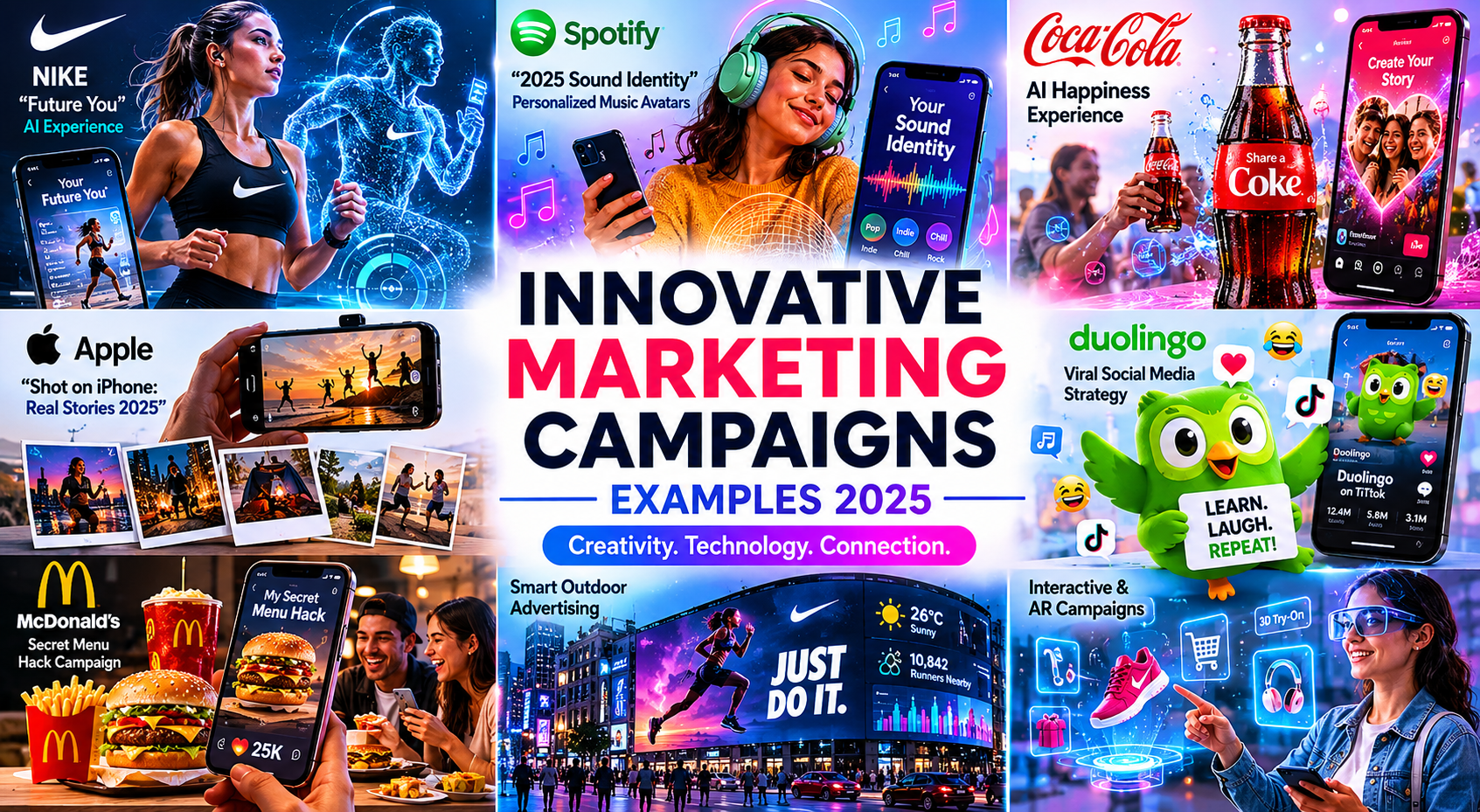
One of the most talked-about campaigns of 2025 came from Nike. The brand launched an AI-powered experience called “Future You,” where users uploaded photos and received AI-generated versions of themselves as future athletes.
The campaign blended personalization with inspiration. Instead of showing celebrity athletes only, Nike allowed everyday people to imagine their own fitness journeys. The results were highly shareable on social media, which helped the campaign spread rapidly online.
The campaign succeeded because it:
- Created emotional engagement
- Used advanced AI technology
- Encouraged user participation
- Generated social media sharing
Nike also focused heavily on storytelling in 2025. Another campaign, “Why Do It?” challenged audiences emotionally by exploring self-doubt and motivation rather than simply promoting athletic success.
Spotify’s Personalized Identity Campaign
Spotify continued its reputation for data-driven marketing with its “2025 Sound Identity” campaign. Instead of simply providing listening statistics, Spotify created digital identities and avatars based on user music habits.
This campaign transformed personal data into entertainment. Users enjoyed sharing their music personalities online, turning millions of customers into brand ambassadors.
Spotify’s strategy worked because:
- It made users feel unique
- The visuals were highly shareable
- It encouraged online conversations
- It combined gamification with personalization
Marketing experts frequently point to Spotify as one of the best examples of how brands can use consumer data creatively without feeling intrusive.
Coca-Cola’s AI Happiness Experience
The Coca-Cola Company embraced artificial intelligence with several interactive campaigns in 2025. One major example was the “AI Happiness Generator,” which allowed users to create personalized visual stories by entering prompts and memories.
Another campaign focused on custom bottle labels generated through AI and QR code interaction. Customers could share stories and receive personalized bottle designs instantly.
These campaigns succeeded because they:
- Encouraged emotional storytelling
- Used AI in a fun and accessible way
- Increased customer participation
- Created memorable brand experiences
The return of Coca-Cola’s classic “Share a Coke” campaign also demonstrated the power of personalization. By adding digital features and social sharing tools, the company modernized a familiar concept for younger audiences.
Apple’s Storytelling Strategy
Apple continued focusing on emotional storytelling rather than technical specifications. Its “Shot on iPhone: Real Stories 2025” campaign featured ordinary people capturing meaningful life moments using iPhones.
Instead of relying on celebrity endorsements, Apple highlighted authenticity and human connection. The campaign emphasized creativity, relationships, and everyday experiences.
This approach stood out because:
- It focused on emotions instead of features
- Real stories felt relatable
- High-quality visuals increased engagement
- Customers became part of the narrative
Apple also experimented with live pop-up experiences connected to its streaming content and entertainment brands, creating immersive real-world marketing opportunities.
Duolingo’s Viral Social Media Strategy
Duolingo remained one of the internet’s most recognizable brands in 2025 thanks to its unpredictable TikTok strategy.
The company’s owl mascot became a viral sensation through humorous, chaotic, and meme-based content. Rather than behaving like a traditional educational brand, Duolingo embraced internet humor and fast-moving social trends.
Its success demonstrates that:
- Humor drives engagement
- Brands must understand internet culture
- Consistency matters
- Authentic social media presence builds loyalty
Duolingo’s content often felt less like advertising and more like entertainment, which made audiences eager to interact with the brand.
McDonald’s Community-Driven Campaign
McDonald’s launched a highly interactive “Secret Menu Hack” campaign where customers shared custom meal combinations online.
The best menu hacks were featured officially by the company, encouraging user-generated content across social media platforms.
This campaign succeeded because:
- Customers felt involved
- It created free organic promotion
- Social media users competed creatively
- Community participation increased visibility
User-generated content has become one of the strongest marketing tools in 2025 because consumers often trust other people more than direct advertising.
The Growth of Purpose-Driven Marketing
Another major trend in 2025 was purpose-driven marketing. Consumers increasingly support brands that reflect social values, environmental awareness, and authenticity.
Several companies focused on:
- Sustainability initiatives
- Diversity and inclusion
- Mental health awareness
- Ethical sourcing
- Community support programs
However, audiences quickly reject campaigns that feel fake or performative. Successful purpose-driven campaigns must align genuinely with a company’s actions and long-term values.
Brands like Patagonia and Dove continued building campaigns focused on social responsibility and authenticity.
Interactive and Gamified Campaigns
Gamification became another powerful marketing strategy in 2025. Instead of passive advertisements, brands created experiences that allowed customers to participate actively.
Examples included:
- AR filters and challenges
- Virtual competitions
- Interactive quizzes
- Personalized avatars
- Digital rewards systems
Interactive marketing increases engagement because consumers spend more time with the brand experience.
Many companies also explored augmented reality and virtual reality to create immersive campaigns, particularly in retail, sports, and entertainment industries.
Out-of-Home Advertising Innovations
Outdoor advertising also evolved significantly in 2025. Traditional billboards became smarter, more dynamic, and interactive.
Brands introduced:
- AI-powered digital billboards
- Motion-sensitive displays
- Weather-responsive advertisements
- Interactive holograms
- Real-time personalization
Nike’s AI-driven billboard campaign changed visuals based on weather conditions and local running activity, creating a highly personalized outdoor advertising experience.
These innovations blurred the line between physical and digital marketing.
Why These Campaigns Worked
Despite their differences, the most successful marketing campaigns of 2025 shared several common characteristics:
Emotional Connection
People remember campaigns that make them feel inspired, entertained, nostalgic, or understood.
Personalization
Consumers respond better to experiences tailored specifically to them.
Social Sharing
Campaigns designed for social media naturally gain more visibility.
Participation
Interactive campaigns encourage users to engage directly with the brand.
Authenticity
Audiences prefer brands that feel genuine and relatable.
Cultural Awareness
Successful brands understand online trends, memes, and digital behavior.
These factors help explain why some campaigns go viral while others fail to gain traction.
Lessons Businesses Can Learn
Businesses of all sizes can learn valuable lessons from these innovative campaigns.
Focus on Experience
Modern marketing is about creating memorable experiences, not just advertisements.
Understand Your Audience
Brands must know how their audience communicates, what platforms they use, and what content they enjoy.
Embrace Technology
AI, personalization, and interactive tools can improve engagement significantly.
Encourage Participation
User-generated content builds trust and expands reach organically.
Be Authentic
Consumers quickly recognize forced or insincere marketing.
Even small businesses can apply these principles creatively without massive advertising budgets.
The Future of Marketing Beyond 2025
The trends shaping marketing in 2025 will likely continue evolving in the future. Experts predict greater integration of:
- Artificial intelligence
- Augmented reality
- Virtual reality
- Real-time personalization
- Voice and conversational marketing
The distinction between entertainment and advertising may become even less visible as brands focus more on creating experiences rather than direct promotions.
Companies that adapt quickly to changing consumer behavior and technological innovation will continue leading the marketing industry.
Conclusion
The most innovative marketing campaigns of 2025 demonstrate how rapidly the advertising world is changing. Brands are no longer relying solely on traditional commercials or static advertisements. Instead, they are creating immersive, personalized, and emotionally engaging experiences that encourage participation and social sharing.
Campaigns from companies like Nike, Spotify, The Coca-Cola Company, Apple, and Duolingo highlight the growing importance of creativity, authenticity, and technology in modern marketing.
From AI-powered personalization to community-driven storytelling, these campaigns reveal one important truth: successful marketing today is about building relationships rather than simply selling products.
As technology continues advancing and consumer expectations evolve, innovative marketing will remain focused on creating meaningful experiences that people genuinely want to engage with.