This guide explains what link building is, which methods actually work for small sites, and how to avoid the mistakes that can hurt your rankings.
What Link Building Really Means
Link building is the process of earning links from other websites to your own. A link from a respected, relevant site tells search engines your content can be trusted. Quality matters far more than quantity. Five links from relevant blogs in your field usually beat fifty links from unrelated directories.
Good links share a few traits:
- They come from a site with real readers and a clear topic
- The topic is relevant to yours
- The link sits naturally inside useful content
- The page is not stuffed with other paid or random links
Start With Something Worth Linking To
No outreach strategy works if your content is weak. People link to pages that save them time or teach them something new. Practical, problem-solving articles are the best example. A detailed guide such as fixing laptop overheating can be referenced by repair blogs, forums, and product reviewers, because it answers a question their own readers ask. That is the kind of page that earns links over time.
Before you start building links, make sure you have a few pages like this: clear, accurate, and better than what already ranks.
Method 1: Guest Posting
Guest posting means writing an article for another website and including a relevant link back to your own. It remains popular because it gives you exposure to a new audience as well as a backlink.
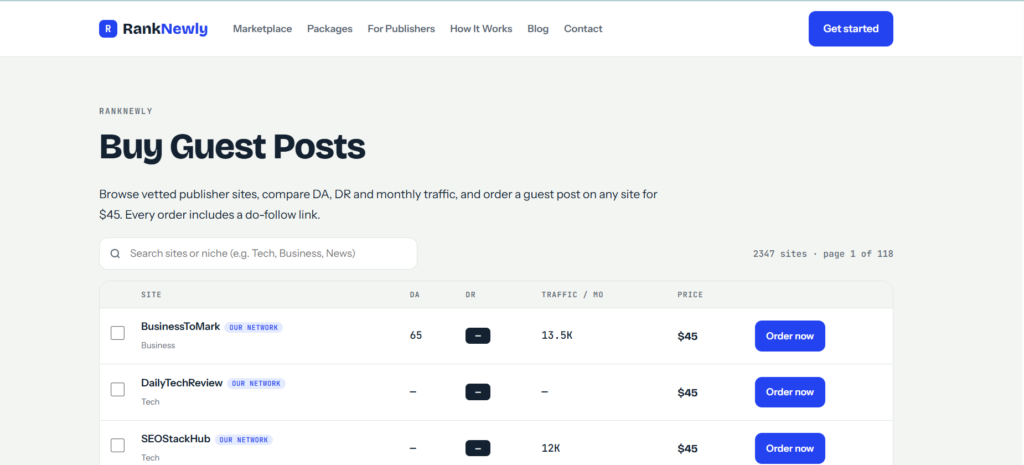
You can do it in two ways. The first is manual outreach: find blogs in your niche, study what they publish, and pitch topics they have not covered. The second is to use a guest posting marketplace, where you can browse sites, compare options, and arrange a placement more quickly.
Whichever way you choose, check these points before you publish anywhere:
- Does the site have genuine traffic and an active readership?
- Is the topic close to yours?
- Is the content on the site well written, not spun or copied?
- Will your article be published as a proper, useful piece?
Method 2: Resource Pages and Roundups
Many websites keep lists of helpful resources. If you have a tool, guide, or study that fits, you can ask to be added. Keep your message short, explain why your page helps their readers, and make it easy for them to say yes.
Method 3: Original Data and Free Tools
Surveys, small studies, checklists, and simple calculators attract links naturally. Even a modest dataset can be valuable if nobody else has published it. This method takes more effort, but the links it earns are the strongest kind because people choose to give them.
Method 4: Paid Visibility
Paid placement is not the same as buying rankings, and it should never be treated as a shortcut. Still, it can help you reach readers while your organic presence is small. Options such as advertising on a business publication can put your brand in front of an audience that already reads related content, which sometimes leads to mentions and natural links as well.
Track What You Build
Links you cannot measure are links you cannot improve. Keep a simple spreadsheet with the date, the source site, the page that was linked, and the anchor text. Then use a set of free SEO tools to check how your backlinks and rankings change over the following weeks. Look for pages that are moving up, and put more effort into similar content.
Anchor Text: Keep It Natural
Anchor text is the clickable wording of a link. Use a mix:
- Your brand name
- The page title or topic
- Generic phrases like “this guide”
- Occasionally, a keyword phrase that fits the sentence
If every link uses the same exact keyword, it looks forced. Variety looks natural.
Mistakes That Can Hurt You
- Buying large packages of links from irrelevant or spammy sites
- Using the same anchor text repeatedly
- Chasing quantity and ignoring relevance
- Expecting results in a week, since links usually take weeks or months to have an effect
- Neglecting your own content quality
Final Thoughts
Link building is slow, but it compounds. Start by making content worth citing, choose partners carefully, vary your methods, and measure the results. A small site that earns a handful of relevant links each month will, over time, outrank a bigger one that ignores them.