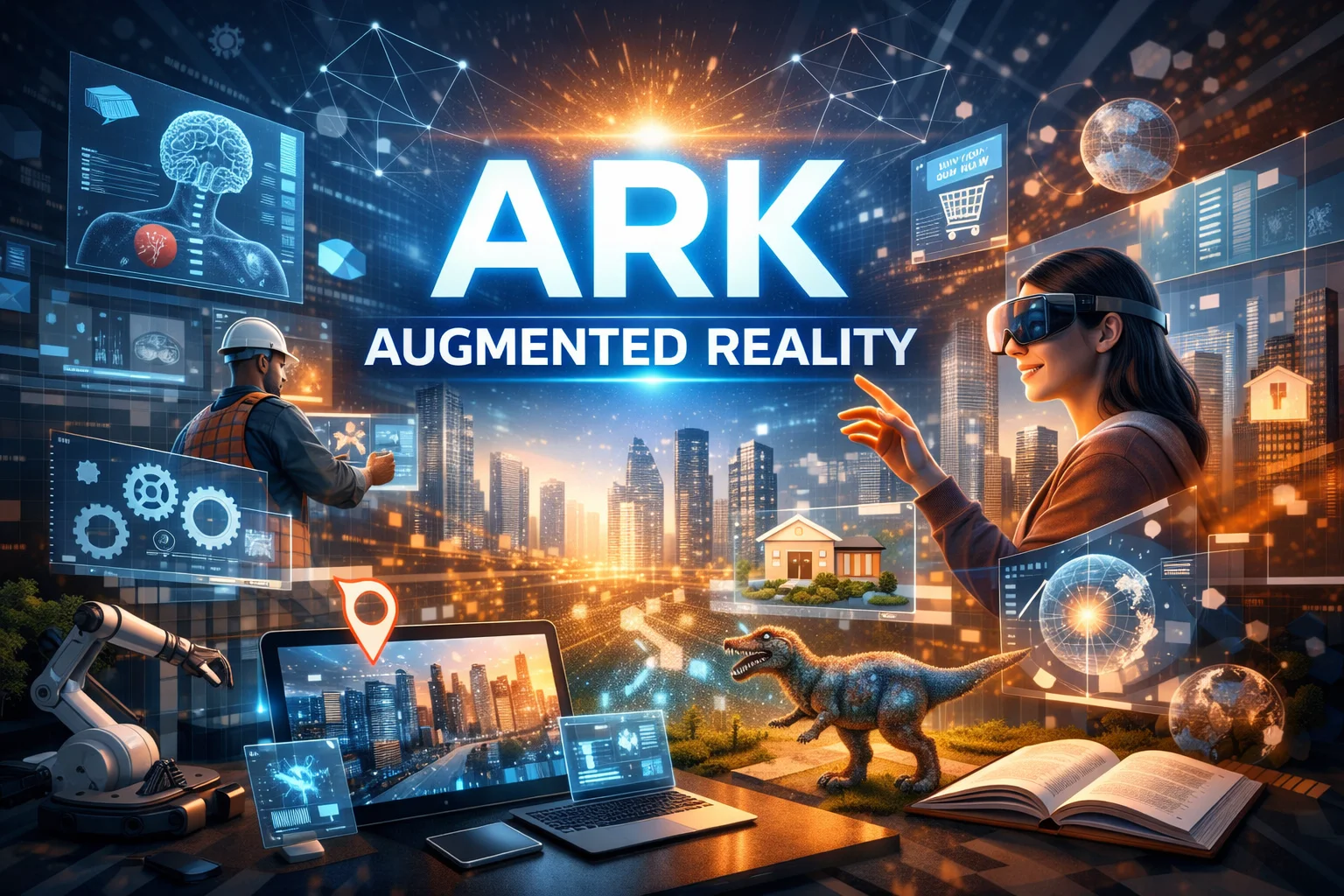
Augmented reality (AR) has rapidly become one of the most exciting technologies in the modern digital landscape. It allows users to interact with digital objects that appear to exist within the real world through smartphones, tablets, or specialized devices. Among the many platforms and tools that support augmented reality development, ARK Augmented Reality has emerged as a concept and framework that focuses on blending digital environments with real-world experiences in innovative ways.
ARK Augmented Reality represents the combination of powerful AR technologies, interactive content, and creative applications that enhance how users perceive and interact with their surroundings. By overlaying computer-generated visuals onto real environments, ARK-based systems enable immersive experiences in gaming, education, retail, healthcare, and many other industries.
Understanding Augmented Reality
Before exploring ARK Augmented Reality specifically, it is important to understand the broader concept of augmented reality. AR is a technology that adds digital elements—such as images, animations, or information—onto the real world through a device’s camera and display.
Unlike virtual reality, which creates a completely artificial environment, augmented reality enhances the real world by integrating digital components with physical surroundings.
Major technology companies have invested heavily in AR development platforms, including ARKit from Apple and ARCore from Google. These tools allow developers to create AR experiences for mobile devices.
ARK Augmented Reality builds on these technologies by focusing on immersive interaction and dynamic digital environments.
The Concept Behind ARK Augmented Reality
The idea behind ARK Augmented Reality is to create interactive digital ecosystems that coexist with real-world environments. The term “ARK” often represents a platform or framework where digital content can be layered onto real spaces, creating a hybrid experience that blends physical and virtual elements.
For example, users might point their smartphone at a city street and see digital objects such as characters, information panels, or virtual structures integrated into the real-world view.
This concept is similar to the technology used in the popular mobile game Pokémon GO, where players explore real locations to find virtual creatures that appear through their phone cameras.
ARK-based augmented reality environments aim to make such interactions even more detailed, immersive, and interactive.
Applications of ARK Augmented Reality
ARK Augmented Reality can be applied in many different industries. Its ability to merge real-world environments with digital information opens up countless possibilities.
Gaming and Entertainment
Gaming is one of the most visible uses of augmented reality. ARK technology can create interactive gaming experiences where players explore real environments while interacting with digital characters and objects.
Players may solve puzzles, collect virtual items, or compete with other players in real-world locations enhanced by digital content.
These experiences transform everyday environments into interactive game worlds.
Education and Learning
Education is another area where ARK Augmented Reality can have a major impact. Students can use AR applications to visualize complex subjects in a more engaging way.
For example:
- Biology students can examine 3D models of human organs.
- History students can explore historical landmarks with interactive digital overlays.
- Engineering students can analyze virtual machine components.
By combining real environments with digital explanations, AR-based learning tools can make education more interactive and memorable.
Retail and Shopping
Retail businesses are increasingly using augmented reality to improve the shopping experience. ARK-based applications allow customers to visualize products in their own environments before making a purchase.
For instance, a furniture store might allow users to place virtual sofas or tables inside their living rooms using their smartphone cameras. This helps customers make better purchasing decisions and reduces uncertainty.
Many online retailers are experimenting with AR technology to bridge the gap between physical and digital shopping experiences.
Healthcare and Medical Training
In healthcare, ARK Augmented Reality can assist doctors, surgeons, and medical students. AR systems can overlay important information during medical procedures or training sessions.
Medical students can explore detailed 3D anatomy models, while surgeons may use AR displays to view critical patient data during operations.
This technology has the potential to improve medical accuracy and training effectiveness.
Tourism and Cultural Experiences
ARK Augmented Reality can enhance tourism by providing interactive guides for historical sites, museums, and cultural attractions.
Visitors can point their devices at monuments or buildings to see historical reconstructions, animations, or informative content about the location.
This approach makes travel experiences more educational and engaging.
How ARK Augmented Reality Works
ARK Augmented Reality relies on several advanced technologies working together to create seamless experiences.
First, a device’s camera captures the real-world environment. Computer vision algorithms then analyze the scene to identify surfaces, objects, and spatial relationships.
Next, AR software places digital elements within the camera view in a way that aligns with the real-world environment. Motion tracking ensures that digital objects remain correctly positioned as the user moves their device.
Sensors such as GPS, accelerometers, and gyroscopes help maintain accurate positioning and orientation.
These technologies combine to create the illusion that digital objects are part of the physical world.
Advantages of ARK Augmented Reality
ARK Augmented Reality offers several advantages compared to traditional digital experiences.
Enhanced Interaction
Users can interact with digital elements in real-world environments, making experiences more engaging.
Improved Learning
Visualizing complex information through AR can make learning easier and more effective.
Real-World Integration
Unlike fully virtual environments, AR maintains a connection with the real world, allowing users to remain aware of their surroundings.
Creative Possibilities
Artists, developers, and designers can create entirely new forms of storytelling and digital experiences.
These advantages explain why augmented reality technology continues to gain popularity.
Challenges of ARK Augmented Reality
Despite its potential, ARK Augmented Reality also faces several challenges.
One challenge is hardware limitations. Not all devices have the processing power or sensors required for advanced AR experiences.
Another issue is battery consumption, as AR applications often require significant computing resources.
Privacy concerns may also arise when applications rely on cameras, location data, or environmental scanning.
Finally, creating high-quality AR content requires specialized skills in design, programming, and 3D modeling.
Overcoming these challenges will be essential for widespread adoption of AR technology.
The Future of ARK Augmented Reality
The future of ARK Augmented Reality is closely connected to advancements in artificial intelligence, computer vision, and wearable devices.
Companies are developing AR glasses and headsets that may replace smartphones as the primary platform for augmented reality experiences. These devices could display digital information directly in a user’s field of vision.
As technology evolves, AR experiences will likely become more realistic, interactive, and integrated into everyday life.
We may see AR applications used for navigation, communication, work collaboration, and entertainment on a much larger scale.
Conclusion
ARK Augmented Reality represents an exciting step forward in the evolution of digital technology. By merging digital elements with real-world environments, AR creates immersive experiences that transform how people learn, play, shop, and interact with information.
From gaming and education to healthcare and tourism, the possibilities for AR applications continue to expand. While challenges such as hardware limitations and privacy concerns remain, ongoing technological advancements are expected to drive further innovation in this field.
As augmented reality becomes more accessible and powerful, ARK Augmented Reality could play a key role in shaping the future of human–computer interaction and redefining how we experience the world around us. 🚀📲