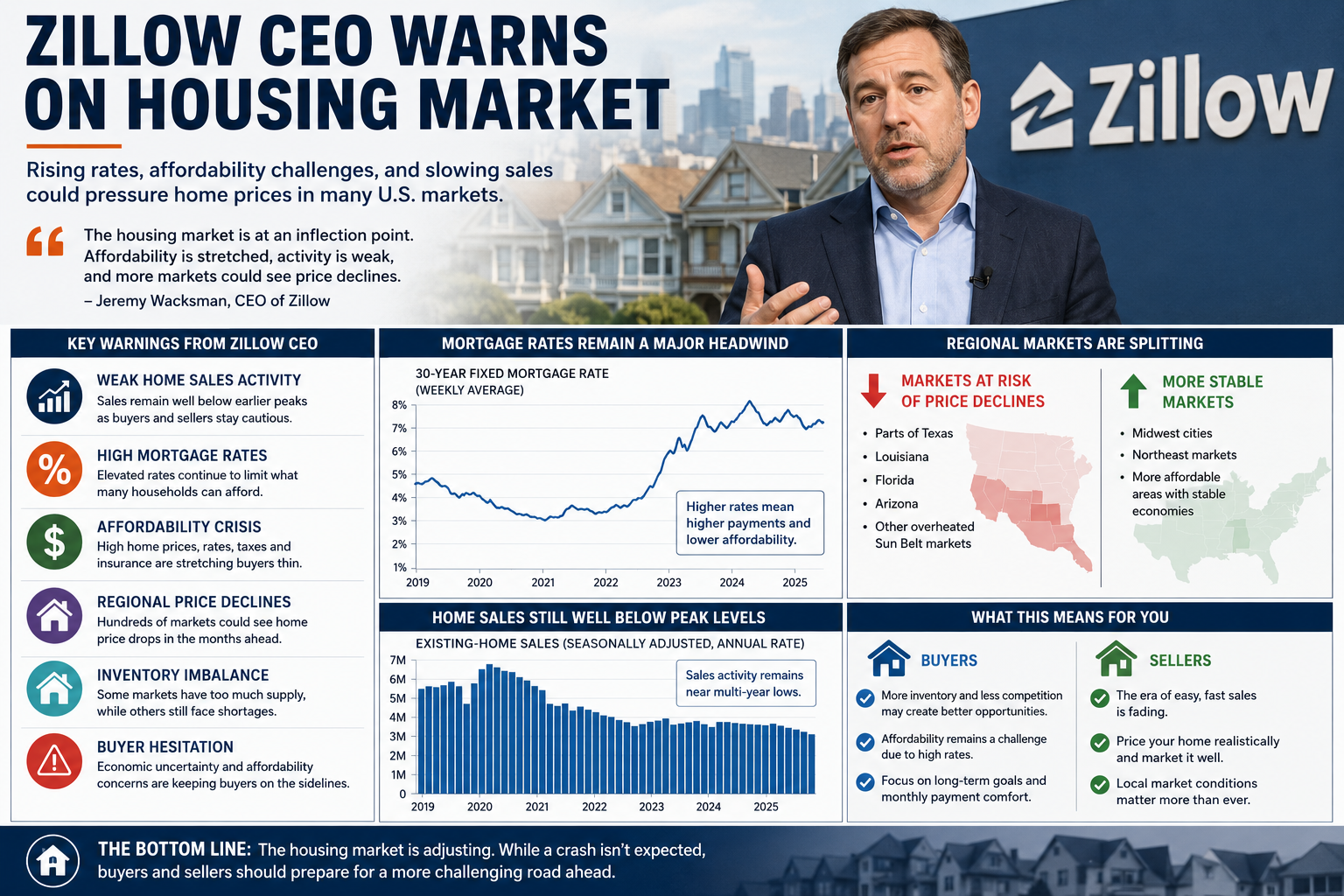
The U.S. housing market continues to face uncertainty as rising mortgage rates, affordability challenges, and slowing home sales reshape the real estate landscape. Recently, the CEO of Zillow warned about troubling trends affecting the housing market, drawing attention from buyers, sellers, investors, and economists across the country.
The warning reflects growing concerns about affordability, stagnant sales activity, and regional price declines that could influence the housing market for years to come. While some experts believe the market is simply correcting after years of explosive growth, others fear the industry may be entering a prolonged slowdown.
Understanding the Zillow CEO’s comments, the underlying economic conditions, and the potential consequences for homeowners and buyers is essential in today’s rapidly changing real estate environment.
Why Zillow’s Housing Market Warning Matters
Zillow is one of the largest and most influential real estate platforms in the United States. Millions of people use the company’s website and mobile applications to search for homes, track property values, and analyze market conditions.
Because Zillow processes enormous amounts of housing data, its forecasts and executive commentary often attract major attention within the real estate industry.
The company’s leadership recently highlighted several troubling issues affecting the market, including:
- Weak home sales activity
- High mortgage rates
- Reduced affordability
- Inventory imbalances
- Regional home price declines
- Buyer hesitation
According to recent reports, Zillow executives acknowledged that housing activity remains sluggish despite continued demand for homeownership.
The Mortgage Rate Problem
One of the biggest concerns mentioned in Zillow-related housing discussions is the continued impact of elevated mortgage rates.
Over the past few years, mortgage rates increased dramatically compared to the historically low levels seen during the pandemic housing boom. Higher borrowing costs have made monthly mortgage payments significantly more expensive for buyers.
For example:
- A home affordable at a 3% interest rate may become unaffordable at 7%
- Monthly payments can increase by hundreds of dollars
- Buyers qualify for smaller loan amounts
- Sellers struggle to attract offers
This affordability squeeze has slowed market activity nationwide.
Even buyers with strong incomes are finding it difficult to purchase homes in many major metropolitan areas.
Affordability Challenges Continue to Grow
Affordability has become one of the defining issues in the modern housing market.
According to Zillow’s market analysis and related reporting, Americans continue facing difficult housing conditions due to the combination of:
- High home prices
- Elevated mortgage rates
- Inflation pressures
- Rising insurance costs
- Increased property taxes
The affordability crisis is especially severe for first-time homebuyers.
Many younger buyers who hoped to enter the housing market are now delaying purchases, continuing to rent, or relocating to more affordable regions.
This shift is changing housing demand patterns across the United States.
Home Sales Remain Weak
Another issue emphasized in the housing market warning is weak sales volume.
Existing-home sales have remained relatively low as buyers and sellers remain cautious. Zillow executives noted that the market has been “essentially flat” in many areas despite ongoing interest in homeownership.
Several factors contribute to slow sales activity:
Sellers Are Locked Into Low Rates
Millions of homeowners refinanced or purchased homes during the pandemic when mortgage rates were extremely low.
Many of these owners now hesitate to sell because moving would require financing a new home at much higher interest rates.
This phenomenon is often called the “lock-in effect.”
Buyers Face Budget Constraints
Higher monthly payments have forced many buyers to reduce budgets or pause home searches entirely.
Even when buyers want to move, affordability barriers remain significant.
Economic Uncertainty
Concerns about inflation, job stability, and recession risks also influence housing decisions.
Consumers tend to become more cautious when economic conditions appear uncertain.
Regional Housing Markets Are Splitting
One of the most interesting developments in the housing market is the growing divide between different regions of the country.
Zillow forecasts suggest that some markets may experience home price declines while others continue growing modestly.
Sun Belt Markets Face Pressure
Several formerly booming Sun Belt cities are now showing signs of weakness.
Markets in parts of:
- Texas
- Louisiana
- Florida
- Arizona
have seen increased inventory and softer buyer demand.
Some of these regions experienced rapid pandemic-era growth fueled by migration trends and remote work flexibility. However, overbuilding and affordability pressures are now contributing to slower price growth or declines.
Midwest and Northeast Markets Show Stability
Meanwhile, some more affordable cities in the Midwest and Northeast are holding up better.
Lower housing costs and stable local economies are helping support demand in these areas.
This regional divergence suggests that the U.S. housing market is no longer moving in a single unified direction.
Inventory Levels Are Changing
Housing inventory has become another major focus of market analysis.
During the pandemic boom, housing inventory reached historically low levels as buyers competed aggressively for limited homes.
Now, conditions are beginning to shift in some markets.
Increased listings are giving buyers more options, which reduces bidding wars and slows price growth.
Some analysts believe inventory normalization could eventually create a healthier and more balanced market.
However, inventory conditions still vary significantly by region.
Zillow’s Own Business Performance
Interestingly, Zillow’s warning about housing conditions comes even as the company continues reporting strong financial results.
According to recent earnings reports, Zillow experienced revenue growth across several business segments despite the slow housing market.
Areas showing growth included:
- Mortgage services
- Rental businesses
- Residential advertising
- Integrated transaction services
This suggests that while the housing market faces challenges, companies that adapt their business models can still perform well.
Zillow has increasingly focused on creating an integrated “housing super app” that combines searching, financing, touring, and closing services into one ecosystem.
What the Warning Means for Homebuyers
For prospective buyers, the Zillow CEO’s comments highlight both risks and opportunities.
Potential Benefits for Buyers
A slower housing market may create advantages such as:
- Less competition
- More negotiation power
- Increased inventory choices
- Fewer bidding wars
- Potential price reductions in some markets
Buyers who were previously priced out may find slightly improved conditions.
Ongoing Challenges
At the same time, affordability remains difficult because mortgage rates continue elevating monthly costs.
Even if home prices stabilize or decline modestly, financing expenses still create major hurdles for many households.
Buyers should carefully evaluate:
- Mortgage affordability
- Job stability
- Local market trends
- Long-term financial plans
before purchasing property.
What the Warning Means for Sellers
Home sellers are also adjusting to a dramatically different environment than the pandemic boom years.
The Era of Easy Sales Is Fading
During 2020 and 2021, many homes sold within days at prices far above asking.
Today’s market is more selective.
Homes that are overpriced or poorly presented may remain on the market longer.
Pricing Strategy Matters More
Sellers now need realistic pricing strategies based on current local conditions rather than past peak valuations.
Accurate pricing, home staging, and strong marketing have become increasingly important.
Regional Differences Are Critical
Some markets still favor sellers, while others are shifting toward buyers.
Local conditions matter far more than national headlines.
Could Home Prices Crash?
One of the biggest questions surrounding Zillow’s warning is whether the housing market could experience a major crash.
Most economists do not currently expect a repeat of the 2008 financial crisis for several reasons:
- Lending standards remain stricter
- Homeowners generally have more equity
- Foreclosure levels remain relatively low
- Inventory shortages still exist nationally
However, experts do expect continued volatility and possible price declines in some regions.
Certain overheated markets may experience more significant corrections than others.
Long-Term Housing Market Outlook
Despite current challenges, long-term housing demand in the United States remains strong.
Population growth, household formation, and limited housing supply continue supporting the market over time.
Many analysts believe the housing sector is moving toward normalization rather than collapse.
Possible future developments include:
- Gradually lower mortgage rates
- Stabilized home prices
- Increased construction activity
- Improved inventory levels
- More balanced buyer-seller conditions
However, affordability will likely remain a central issue for years ahead.
Conclusion
The warning from Zillow’s CEO reflects growing concern about affordability pressures, weak home sales, and uneven market conditions across the United States. While the housing market has not collapsed, it is clearly undergoing a significant transition after the extraordinary pandemic-era boom.
Higher mortgage rates, rising ownership costs, and regional price corrections are reshaping buyer and seller behavior nationwide. Some formerly red-hot markets are cooling rapidly, while more affordable regions continue attracting interest.
For buyers, the changing market may offer improved negotiating power and increased inventory, though affordability challenges remain substantial. Sellers, meanwhile, must adapt to slower conditions and more cautious consumers.
The future of the housing market will depend heavily on mortgage rates, economic conditions, housing supply, and consumer confidence. As Zillow and other industry leaders continue monitoring trends, one thing is clear: the era of easy housing growth has ended, and a more complex real estate environment has emerged.