In business, every transaction appears simple on the surface: a buyer makes an offer, a seller responds, and a deal is completed. However, in today’s digital economy, this process is far more complex. Between the moment a potential customer becomes aware of a product and the moment a seller receives a finalized offer, multiple systems, intermediaries, platforms, and psychological triggers come into play.
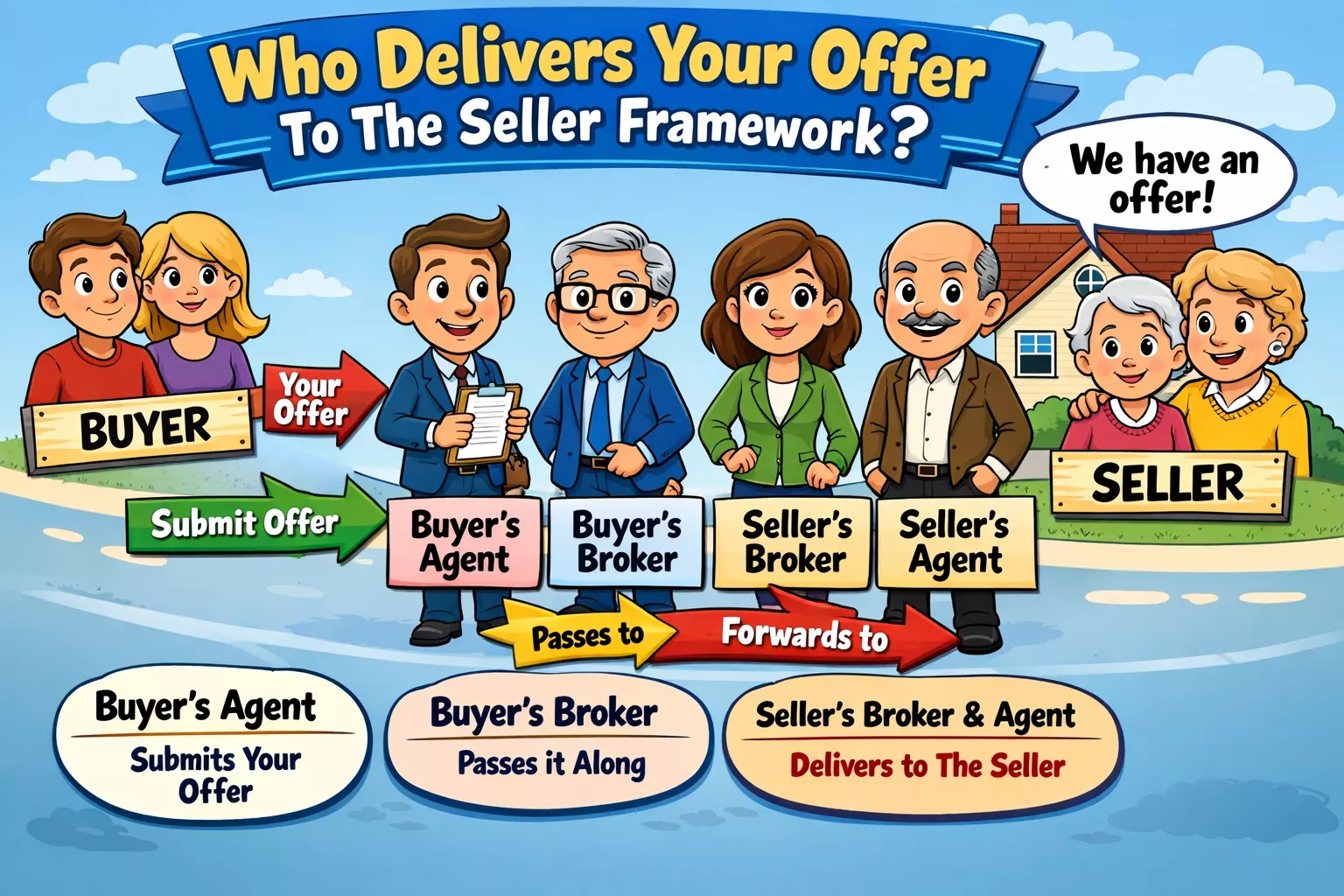
This is where the concept of “Who Delivers Your Offer to the Seller Framework” becomes important. It is not a single official academic model, but rather a practical way of understanding the invisible infrastructure that carries a customer’s intent from awareness to conversion.
This article breaks down that framework in detail, explaining the roles of platforms, algorithms, marketing funnels, intermediaries, and decision systems that ultimately determine how your offer reaches the seller—and whether it succeeds.
1. The Core Idea of the Framework
At its simplest, the framework answers one key question:
When a buyer makes an offer, who or what actually delivers it to the seller?
In traditional markets, the answer was simple: the buyer directly communicated with the seller. But in modern commerce, especially online, there are multiple layers in between:
- Advertising platforms
- Search engines
- E-commerce marketplaces
- Social media algorithms
- Payment processors
- Automated bidding systems
- Sales funnels and CRM systems
Each of these acts as a delivery mechanism for intent.
So instead of a direct path, the offer travels through a multi-agent system that filters, enhances, delays, or prioritizes it before it reaches the seller.
2. The Evolution from Direct Selling to Mediated Offers
To understand this framework, it is important to see how commerce has evolved.
2.1 Traditional Commerce
In physical markets:
- Buyer walks into a store
- Buyer makes an offer or selects a product
- Seller responds instantly
Here, the delivery mechanism is human-to-human interaction.
2.2 Digital Commerce
In modern systems:
- Buyer searches online
- Algorithms filter results
- Ads influence choices
- Platforms rank sellers
- Payment systems validate transactions
Now, the “delivery of the offer” is handled by machines and platforms rather than direct interaction.
2.3 Platform-Driven Economy
Today, most offers are not even seen by sellers until:
- A platform processes the buyer’s intent
- A matching system identifies relevant sellers
- A ranking algorithm prioritizes visibility
This shift is the foundation of the framework.
3. Key Components of the “Offer Delivery System”
The framework can be broken down into several key actors that determine how an offer reaches a seller.
3.1 The Buyer (Origin of Intent)
The buyer initiates the process. Their actions include:
- Searching for products
- Clicking ads
- Adding items to carts
- Submitting inquiries
- Negotiating prices
However, the buyer does not directly deliver the offer anymore. Instead, they generate signals of intent.
These signals are then captured by digital systems.
3.2 Platforms (The Primary Delivery Channel)
Platforms are the most important intermediaries. These include:
- E-commerce marketplaces
- Social media platforms
- Search engines
- Classified ad networks
They act as gatekeepers of visibility.
Their role includes:
- Matching buyers with sellers
- Filtering irrelevant sellers
- Ranking listings
- Controlling exposure
In this sense, platforms are the primary “delivery agents” of offers.
3.3 Algorithms (The Invisible Decision Makers)
Algorithms decide:
- Which seller sees the buyer’s offer
- Which listing is shown first
- Which ads are displayed
- Which inquiries are prioritized
They evaluate factors such as:
- Relevance
- Price competitiveness
- Engagement history
- Conversion probability
Algorithms do not just deliver offers—they shape them before delivery.
3.4 Advertising Networks (Intent Amplifiers)
Advertising systems like Google Ads or Meta Ads function as intent amplifiers.
They:
- Detect user interest
- Push seller offers to buyers
- Match bids with search behavior
In this case, the “offer” is often delivered before the buyer explicitly makes one, through targeted advertising.
So instead of buyer → seller, the flow becomes:
Data signal → ad network → buyer → seller
3.5 Marketplaces (Structured Offer Environments)
Marketplaces such as Amazon-like platforms or freelancing sites introduce structure:
- Standardized product listings
- Built-in messaging systems
- Automated offer submission systems
Here, the platform itself often transmits offers directly to sellers via:
- Cart purchases
- Buy-now systems
- Quote requests
- Job proposals
The marketplace becomes both messenger and mediator.
3.6 CRM Systems (Seller-Side Delivery Processing)
On the seller’s side, Customer Relationship Management (CRM) tools receive incoming offers.
These systems:
- Organize leads
- Prioritize inquiries
- Automate responses
- Track buyer behavior
So even after an offer is delivered, it is processed again before a human seller acts on it.
4. The Offer Delivery Funnel
The entire framework can be visualized as a funnel:
Stage 1: Awareness
Buyer becomes aware of a product via ads, search, or social media.
Stage 2: Interest
Buyer engages with content, clicks links, or views listings.
Stage 3: Intent Formation
Buyer shows behavior indicating purchase intent.
Stage 4: Platform Interpretation
Algorithms interpret behavior and route the signal.
Stage 5: Offer Transmission
The platform delivers the offer to the seller system.
Stage 6: Seller Response
CRM or seller processes the offer and responds.
At no point is the process purely direct. Each stage involves intermediation.
5. Who Actually Delivers the Offer?
The key question of the framework can now be answered more clearly.
The “delivery” is not handled by a single entity. Instead, it is a distributed responsibility system:
- Platforms deliver visibility
- Algorithms deliver prioritization
- Networks deliver targeting
- CRMs deliver organization
- Buyers deliver intent signals
So the real answer is:
The offer is delivered by an ecosystem, not a single actor.
6. Why This Framework Matters in Modern Business
Understanding this framework is critical for several reasons.
6.1 Marketing Optimization
Businesses can no longer rely on direct selling. They must optimize:
- Search visibility
- Ad targeting
- Platform ranking
- Conversion funnels
If they do not understand the delivery system, their offers may never reach sellers—or buyers.
6.2 Competitive Advantage
Companies that understand delivery mechanics can:
- Outrank competitors in search
- Win better ad placements
- Capture more qualified leads
- Reduce customer acquisition costs
6.3 Data Dependency
Modern offer delivery is driven by data. Without data signals:
- Algorithms cannot rank sellers
- Platforms cannot match intent
- Ads cannot target users
Data is the fuel of the delivery system.
7. The Role of AI in Offer Delivery
Artificial intelligence is becoming a central part of this framework.
AI systems now:
- Predict buyer intent
- Automate ad bidding
- Rank sellers dynamically
- Generate personalized offers
- Route leads intelligently
This means the “delivery of offers” is increasingly autonomous.
In the future, AI may fully control:
- Who sees what
- When offers are delivered
- Which sellers are prioritized
8. Hidden Layers of the Framework
There are also invisible layers most users never see:
8.1 Tracking Systems
Cookies, pixels, and analytics tools track buyer behavior.
8.2 Auction Systems
Ad impressions are often decided through real-time bidding auctions.
8.3 Recommendation Engines
Platforms suggest sellers without explicit search queries.
These systems silently determine how offers move through the ecosystem.
9. Challenges in the Offer Delivery System
Despite its efficiency, the system has challenges:
- Algorithm bias
- Market monopolization
- Data privacy concerns
- High advertising costs
- Reduced organic visibility
Sellers often struggle because they are dependent on systems they do not control.
10. Future of Offer Delivery Systems
The framework is evolving rapidly. Future developments may include:
- Fully AI-driven marketplaces
- Decentralized offer delivery systems
- Blockchain-based transaction routing
- Hyper-personalized buyer-seller matching
- Voice and predictive commerce systems
In such systems, the concept of “sending an offer” may become automatic and invisible.
Conclusion
The “Who Delivers Your Offer to the Seller Framework” reveals a fundamental truth about modern commerce: offers are no longer delivered by people alone, but by interconnected digital systems.
From platforms and algorithms to advertising networks and CRM systems, the journey of a single buyer’s intent is shaped by multiple invisible forces. The seller is no longer just waiting for offers—they are participating in a highly engineered delivery ecosystem.
Understanding this framework is essential for anyone involved in business, marketing, or digital strategy, because success today depends not only on what you sell, but on how effectively your offer travels through the systems that deliver it.