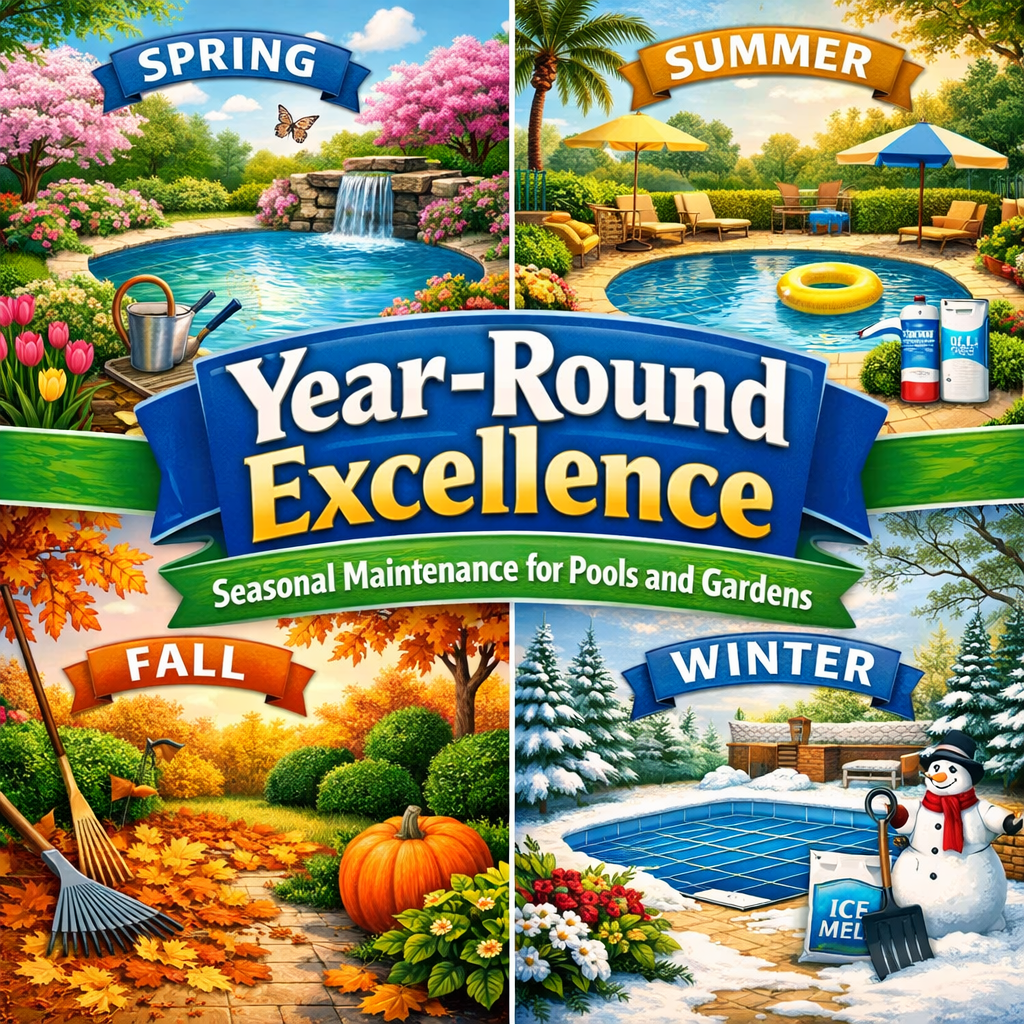
Owning a backyard that features both a swimming pool and a lush garden is the ultimate goal for many homeowners, but keeping those spaces in top shape requires a real understanding of the changing seasons. Every quarter of the year throws its own set of challenges at you, from the heavy pollen and gunk of spring to the freezing temperatures of a harsh winter. Taking a reactive approach usually leads to expensive repairs and a lot of lost weekends. Instead, by following a proactive seasonal schedule, you can make sure your backyard stays a sanctuary of relaxation. This guide breaks down the essential tasks needed to look after your pool and garden throughout the year, focusing on efficiency and using modern tools to keep your workload light.
1.Spring: Preparing for the Return of Outdoor Living
When spring finally rolls around, it is basically a massive reset for your property. As the weather warms up, your goal is to transition the pool and garden from their dormant winter states into a functional, swim-ready environment. The first big job for any pool owner is dealing with the winter cover. You want to move carefully here to keep any accumulated leaves or slime from falling into the water. Once that cover is off, it’s time for a deep dive into your equipment. Check the pump, filter, and heater to make sure no freeze damage happened over the winter. Reconnecting your plumbing lines and looking for cracks in your o-rings now will save you from major leaks later on.
Water chemistry is equally important during the spring opening. After filling the pool to the proper level, testing the pH, alkalinity, and calcium hardness is essential. Balancing these levels before the water warms up prevents early algae blooms and protects the pool surfaces. In the garden, spring is the time for a clean slate. Raking away old leaves, pruning dead branches from trees and shrubs, and testing your soil are vital first steps. This is also the optimal period to finalize your irrigation strategy. Setting up an intelligent smart sprinkler system early in the season ensures that as your new plants and lawn begin to grow, they receive consistent hydration without the risk of over-watering during the rainy spring months.
2.Summer: Maintaining Peak Performance and Clarity
Once the summer heat really kicks in, your backyard moves into its busiest period. For the pool, this means you have to be more vigilant about your sanitizer levels and filtration. High temperatures and constant swimming introduce things like sunscreen, sweat, and dirt, which can eat through your chlorine faster than you’d think. You’ll need to run your filtration system for at least eight to twelve hours a day just to keep the water moving and clear. Daily skimming is a great habit, but the heavy scrubbing of the floors and walls is a lot of work when it’s ninety degrees outside.
To maintain a professional-grade environment with minimal effort, many homeowners rely on a dedicated pool cleaner to handle the heavy lifting. By allowing a robotic device to patrol the water on a daily basis, you prevent the buildup of silt and biofilm that leads to cloudy water. In the garden, summer maintenance focuses on moisture retention and pest management. Applying a fresh layer of mulch helps keep soil temperatures cool and reduces evaporation. Watering should shift to the early morning hours to allow plants to hydrate before the midday sun. Consistent attention during these peak months prevents minor issues from turning into season-ending problems.
3.Autumn: Protecting Your Investment From Falling Debris
When the air gets crisp and the leaves start to turn, your maintenance goals shift toward debris management and buttoning things up for the cold. For pool owners, autumn is basically a war against organic matter. Falling leaves aren’t just ugly; they can stain your pool surfaces and clog up your skimmer baskets, which puts a ton of stress on your pump. Using a high-quality cover when you aren’t swimming will cut your cleaning time in half. This is also when you should start tweaking your chemical routine, since chlorine lasts much longer when the water is cool.
In the garden, autumn is the season for “tucking in” your landscape. This means planting your spring bulbs, dividing your perennials, and doing one last deep weeding session. It’s also important to pull out any annuals that are finished so they don’t give pests a place to hide over the winter. If you live somewhere with a real freeze, autumn is the time to winterize your irrigation lines so your pipes don’t burst when the ground gets hard. A final check of your lawn—maybe some aeration or overseeding—will make sure it comes back thick and green in the spring.
4.Winter: Safeguarding Systems During Dormancy
Winter might be the quietest time for your backyard, but it is actually the most dangerous season for your mechanical systems. Doing your winterization correctly is the difference between an easy spring opening and a spring spent paying for expensive plumbing repairs. For the pool, this means a deep clean, balancing the chemistry, and lowering the water level slightly. You need to completely drain all the water from your pumps, filters, and heaters. Blowing out the lines with compressed air and adding some pool-grade antifreeze gives you that extra layer of security against ice expansion.
In the garden, winter is all about protection. Delicate shrubs might need burlap wraps to stop windburn, and you should check your mulch to make sure the root zones of your perennials are well-insulated. Throughout the winter, it’s a good idea to peek at your pool cover every now and then to make sure it’s still secure and hasn’t collected too much heavy snow or standing water. This downtime is also the perfect chance to look back at the past year and plan for any upgrades or changes you want to make once the sun comes back out.
5.The Power of Consistency and Automation
At the end of the day, the secret to a backyard that looks amazing all year is consistency. By breaking your maintenance down into these seasonal chunks, you avoid the stress of a massive, overwhelming cleanup. Integrating technology really changes the way you look at homeownership. Instead of being a laborer in your own yard, you become the manager of a smart, self-sustaining environment. This proactive approach saves you time and money, ensuring your outdoor space is always ready for a relaxing weekend, no matter what the calendar says.
Developing these habits keeps your property value high and your personal stress low. Whether you are dealing with the blistering heat of July or the first frost of November, a well-prepared backyard is a tough one. By mixing your own observations with the precision of automated tools, you can reach a level of excellence that used to require a full-time professional crew.