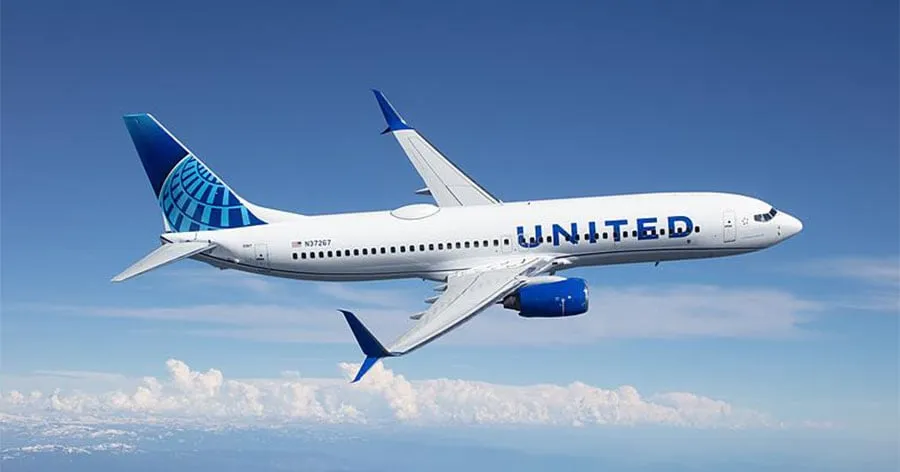
On Sunday, August 24, 2025, United Airlines flight UA967, a transatlantic service originally scheduled from Naples, Italy to Newark Liberty International Airport (EWR) in the United States, was diverted to St. John’s International Airport (YYT) in Canada due to a technical issue experienced mid‑flight.
The disruption left passengers delayed by more than ten hours and shed light on the complex decision‑making that pilots and airlines must undertake when dealing with in‑flight irregularities. Here’s a closer look at this incident, why diversions happen, how United handled the situation, and what passengers can expect when flights are rerouted.
The Flight & the Diversion
UA967 departed Naples Airport at 17:13 Central European Summer Time (CEST), already running about three hours behind schedule, according to aviation tracking reports.
After cruising for several hours over the North Atlantic, the Boeing 767‑300ER aircraft — registered as N671UA — experienced what United later described as a “technical reason,” prompting the pilots to divert to the nearest suitable airport for safety and operational assessment.
At approximately 20:25 local time, the flight landed safely in St. John’s, Newfoundland and Labrador, where it disembarked passengers before a replacement aircraft was sent to complete the journey. The new plane arrived later and brought passengers to Newark early Monday morning, more than ten hours late overall.
What Does “Technical Reason” Mean?
When an airline cites a “technical issue,” it can refer to a broad range of possible problems involving aircraft systems — from routine mechanical checks to more nuanced detection of potential faults that require immediate attention.
Commercial airlines operate under strict safety protocols under regulators such as the Federal Aviation Administration (FAA) in the US or Transport Canada. Any indicator of a system anomaly — especially on long overwater flights — usually triggers heightened caution and often a diversion to the nearest safe airport.
Diversions like the one with UA967 are not always cause for alarm, but they are standard practice in aviation safety. Even an electrical, hydraulic, or sensor issue that cannot be definitively ruled out can lead to a diversion rather than continue an international crossing. This ensures passenger safety and gives maintenance crews on the ground a chance to diagnose the issue fully.
Diverting to St. John’s: Why That Airport Was Chosen
St. John’s is a common diversion point for transatlantic flights. Its strategic geographic location on Canada’s easternmost tip makes it ideal for air traffic crossing the North Atlantic — one of the busiest long‑haul corridors in the world.
Key reasons airlines use St. John’s as a diversion airport include:
-
Proximity to North Atlantic Tracks (NATs) used by Europe‑to‑North America flights.
-
Long runways and full international services capable of handling large wide‑body aircraft like Boeing 767s.
-
Ground support and infrastructure required for passenger disembarkation, maintenance checks, and onward re‑routing if needed.
Because safety is paramount, pilots are trained to choose diversion airports based on weather, runway length, airport facilities, and the nature of the issue detected in flight.
Passenger Experience and Airline Response
Passengers aboard UA967 faced an unexpected delay and rerouting, which can be stressful even under the best circumstances. United typically offers the following in such instances:
-
Rebooking on a replacement aircraft or alternative flights to complete their journey.
-
Hotel accommodations or vouchers if overnight stays become necessary (typically when long delays or airport curfews prevent onward travel).
-
Communication updates and support from customer service regarding timelines, connections, and baggage updates.
In this specific case, after the aircraft landed in St. John’s, United deployed another Boeing 767 — tail N673UA — to take passengers onward to Newark, with arrival early Monday morning, well past the original estimated time.
While delays of this magnitude can be frustrating, United’s response focused on completing the itinerary safely and with minimal further disruption.
Why Diversions Are Part Of Normal Operations
A flight diversion does not automatically imply a disaster; rather, it is a safety‑first approach embedded in global aviation norms. Pilots and airline operations teams will divert when necessary to:
-
Address mechanical or technical irregularities
-
Respond to weather phenomena ahead
-
Manage medical emergencies onboard
-
Handle air traffic control reroutes
-
Resolve security concerns promptly and safely
Many safety‑related diversions happen out of caution rather than clear danger. For example, unrelated Boeing 777‑series United flights were diverted previously due to medical emergencies requiring immediate aid on the ground. In other cases, flights have been returned or diverted when crew identified procedural issues or anomalies early in the flight.
Industry Standards for Dealing with Diversions
Airlines and regulators operate under strict standards.
-
Safety Comes First: A decision to divert prioritizes human lives above schedules or airline economics.
-
Nearest Suitable Airport: Flights are directed to the closest airport that can safely support the aircraft and passenger needs.
-
Crew Duty Limits: After diversion, rest and duty time policies may require crew changes or delays.
-
Passenger Care: Airlines follow regulatory and company policies to support passengers during extended delays.
Passengers are advised to keep communication lines open, monitor airline apps for updates, and understand that diversions, while inconvenient, reflect robust safety systems.
The Impact on Travel Plans
A diversion of a long‑haul flight like UA967 inevitably affects passengers’ onward connections, hotel reservations, ground transportation, and other logistical details.
-
Missed connections: Many travelers on flights like UA967 connect to domestic services; diversion and delay may result in missed flights.
-
Accommodation changes: Airlines may provide vouchers or accommodations depending on policies and delay duration.
-
Baggage handling: Baggage may be delayed or routed separately in some cases.
-
Customer compensation: In some jurisdictions, passengers may be eligible for travel compensation when delays reach certain thresholds.
United Airlines’ customer service teams typically assist in rearranging connections, lodging, and meals when delays exceed several hours.
Aviation Safety and Public Confidence
While delays and diversions are inconvenient, they are a testament to the rigorous safety culture in commercial aviation. Every diverted flight undergoes proper logging, crew and maintenance briefings, and — when necessary — follow‑up inspections before returning to regular service.
Airlines often review flight data following a diversion to determine whether maintenance, crew retraining, or system checks are required before the aircraft returns to service. These layers of checks ensure that passengers can be confident in returning to their scheduled flights.
Looking Forward
Flight UA967’s diversion to St. John’s serves as a reminder of the complex logistics and decision frameworks behind every long‑haul flight. While the specifics of the “technical reason” were not publicly detailed, the outcome — a safe diversion and later journey completion — underscores the priority given to safety over timeliness.
Passengers who experienced the delay may face inconveniences, but under modern airline protocols, such diversions are managed with care, communication, and contingency planning to keep travelers informed and secure.
In a world where millions of airline passengers fly safely every day, the occasional diversion is not an aberration but a marker of aviation’s commitment to safety above all else.
Short Article: United Flight UA967 Diverted
United Airlines flight UA967, operating between Naples, Italy, and Newark, USA, was diverted to St. John’s International Airport in Canada on August 24, 2025, due to a technical issue detected mid‑flight. The Boeing 767‑300ER had departed Naples about three hours late and landed in St. John’s after the crew chose to reroute for safety and operational evaluation. A replacement aircraft later continued the journey to Newark with passengers, arriving more than ten hours late. Diversions like this are standard aviation practice when aircraft systems show irregularities; they ensure passenger and crew safety. United worked to re‑accommodate travelers and complete their travel safely, reflecting industry priorities of caution and communication in such events.