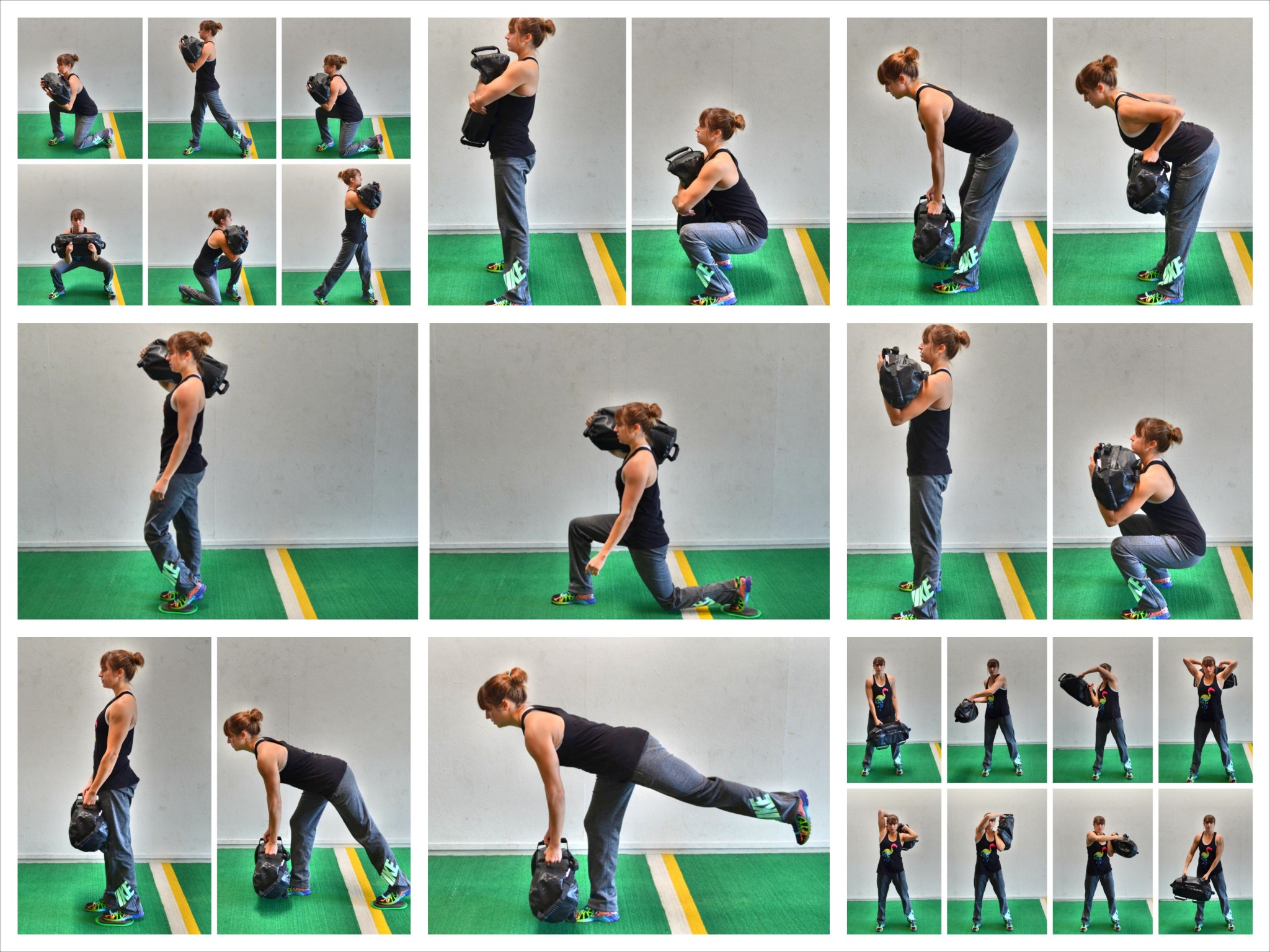
Sandbag routines have become increasingly popular in the fitness world—and for good reason. Unlike traditional gym equipment that distributes weight evenly and predictably, sandbags are unstable, shifting, and challenging. This unique quality forces your body to work harder, engaging stabilizer muscles, improving coordination, and building real-world strength. Whether you are a beginner looking to spice up your workouts or an advanced athlete searching for functional training methods, sandbag routines offer a versatile and effective solution.
This article explores what sandbag routines are, their benefits, key exercises, sample routines, and best practices to help you train safely and effectively.
What Are Sandbag Routines?
Sandbag routines are workout programs that use weighted sandbags as the primary training tool. A fitness sandbag is typically a durable bag filled with sand or other materials, often equipped with handles for gripping. The weight inside shifts as you move, making each exercise more demanding than using fixed weights like dumbbells or barbells.
These routines can include strength training, conditioning, endurance work, and even mobility exercises. Because sandbags can be lifted, carried, dragged, thrown, or held in various positions, they offer endless workout possibilities.
Why Choose Sandbag Training?
1. Functional Strength Development
Sandbag routines closely mimic real-life lifting and carrying tasks. The awkward shape and shifting weight challenge your body in ways that traditional weights cannot, helping you develop functional strength that transfers to everyday activities.
2. Full-Body Engagement
Almost every sandbag exercise recruits multiple muscle groups. Your core, grip strength, and stabilizer muscles are constantly engaged to control the unstable load.
3. Versatility and Adaptability
Sandbags can be used indoors, outdoors, at home, or in the gym. You can adjust the weight easily by adding or removing sand, making them suitable for all fitness levels.
4. Cost-Effective Equipment
Compared to large gym machines, sandbags are relatively inexpensive. A single sandbag can replace multiple pieces of equipment, making it ideal for home workouts.
5. Improved Conditioning
Sandbag routines elevate heart rate quickly, making them excellent for metabolic conditioning, fat loss, and cardiovascular fitness.
Key Muscles Targeted in Sandbag Routines
Sandbag training is inherently full-body, but some of the primary muscle groups include:
-
Core: Abdominals, obliques, and lower back
-
Lower Body: Quads, hamstrings, glutes, and calves
-
Upper Body: Shoulders, chest, back, and arms
-
Grip and Forearms: Constantly challenged due to unstable weight
Because of this broad engagement, sandbag routines are efficient and time-saving.
Essential Sandbag Exercises
Before diving into full routines, it’s important to understand some foundational sandbag exercises.
Sandbag Deadlift
This exercise builds posterior chain strength, targeting the glutes, hamstrings, and lower back. The instability of the sandbag forces greater core activation.
Sandbag Squat
Holding the sandbag in a front-loaded or bear-hug position increases core engagement and improves squat mechanics.
Sandbag Clean
A powerful, explosive movement that trains hips, core, shoulders, and grip. It is excellent for building strength and coordination.
Sandbag Carry
Simply carrying a sandbag over a distance can be incredibly challenging. Carries improve grip strength, posture, and core stability.
Sandbag Press
Pressing a sandbag overhead challenges shoulder stability and core control more than a barbell press.
Sample Sandbag Routines
Below are examples of sandbag routines for different fitness goals. Adjust weight and repetitions according to your ability.
Beginner Sandbag Routine
This routine focuses on learning movement patterns and building a foundation.
-
Sandbag Squat – 3 sets of 10 reps
-
Sandbag Deadlift – 3 sets of 10 reps
-
Sandbag Carry – 3 rounds of 30 seconds
-
Sandbag Overhead Press – 3 sets of 8 reps
Rest for 60–90 seconds between sets.
Full-Body Strength Sandbag Routine
Ideal for intermediate trainees aiming to build strength.
-
Sandbag Clean – 4 sets of 6 reps
-
Sandbag Front Squat – 4 sets of 8 reps
-
Sandbag Bent-Over Row – 3 sets of 10 reps
-
Sandbag Bear-Hug Carry – 3 rounds of 40 meters
Rest 90 seconds between sets.
Conditioning and Fat-Loss Sandbag Routine
This high-intensity routine boosts endurance and burns calories.
-
Sandbag Squat to Press – 30 seconds
-
Sandbag Reverse Lunge – 30 seconds
-
Sandbag High Pull – 30 seconds
-
Sandbag Carry – 30 seconds
Rest for 30 seconds, then repeat for 4–5 rounds.
Best Practices for Sandbag Training
Start Light
Because sandbags are unstable, they often feel heavier than traditional weights. Begin with a lighter load to master technique before increasing weight.
Focus on Grip and Core
Grip strength and core stability are limiting factors in sandbag routines. If your grip fails, your workout will suffer. Consider grip-specific exercises or straps if needed.
Maintain Proper Form
Poor form increases the risk of injury, especially when lifting awkward loads. Keep your back neutral, brace your core, and move with control.
Use Progressive Overload
Gradually increase weight, repetitions, or intensity over time. Progressive overload ensures continued strength and conditioning improvements.
Warm Up Thoroughly
Dynamic warm-ups are essential before sandbag routines. Focus on hips, shoulders, and core activation to prepare your body for unstable loads.
Common Mistakes to Avoid
-
Using Too Much Weight: Ego lifting leads to poor form and injury.
-
Ignoring Rest Periods: Fatigue can quickly compromise technique.
-
Neglecting Mobility: Sandbag training is demanding; mobility work helps prevent stiffness and imbalances.
-
Inconsistent Training: Like any fitness program, consistency is key to seeing results.
Who Can Benefit from Sandbag Routines?
Sandbag routines are suitable for a wide range of individuals, including:
-
Athletes seeking functional strength
-
Fitness enthusiasts bored with traditional weights
-
People training at home with limited equipment
-
Military, law enforcement, and tactical professionals
-
Individuals focused on real-world strength and conditioning
With proper scaling, almost anyone can safely incorporate sandbag training into their routine.
The Future of Sandbag Training
As fitness trends continue to emphasize functional movement and versatility, sandbag routines are likely to grow in popularity. They align well with modern training philosophies that prioritize movement quality, adaptability, and real-life strength over isolated muscle building.
Many coaches now integrate sandbags into CrossFit-style workouts, boot camps, and rehabilitation programs, highlighting their broad appeal and effectiveness.
Conclusion
Sandbag routines offer a powerful, flexible, and practical approach to fitness. By challenging your body with unstable, shifting weight, they build functional strength, improve conditioning, and enhance overall athletic performance. Whether your goal is muscle building, fat loss, or real-world strength, sandbag training can help you achieve it.
With minimal equipment and endless exercise variations, sandbag routines prove that you don’t need a fully equipped gym to train effectively. All you need is a sandbag, commitment, and the willingness to embrace the challenge.