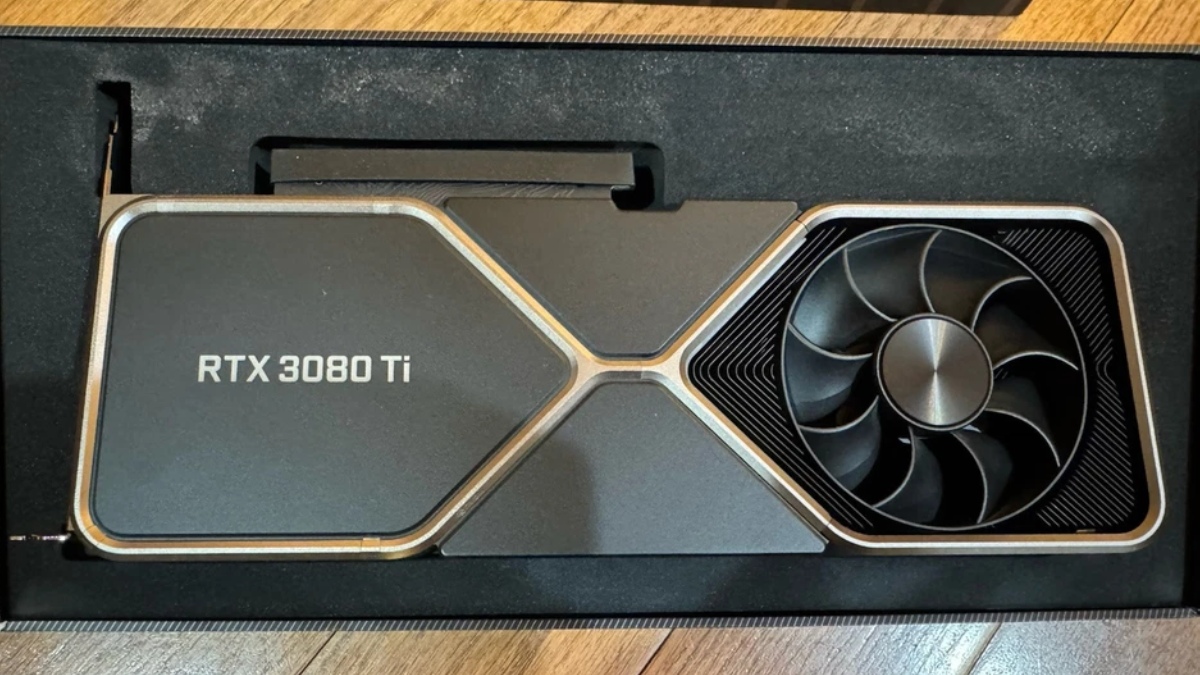
When people talk about an Rtx 3080 Ti engineering sample, they are usually referring to a pre-production graphics card that was built for testing, validation, or internal evaluation before final retail release. In the broader GPU world, the RTX 30 series is Nvidia’s Ampere-based family, and the 3080 Ti sits in that lineup as a high-end consumer card designed for demanding gaming and creative workloads.
That simple label can create a lot of confusion. Some buyers hear “engineering sample” and imagine a rare collector’s item. Others hear it and worry the card is defective, unstable, or impossible to support. The truth is more nuanced. A sample unit can be interesting for research, benchmarking, and learning, but it also brings uncertainty that retail cards do not usually carry. Intel’s own description of engineering samples is helpful here: they are pre-production units used for product design and testing before launch.
This article breaks down what that means in practical terms. You will see how these cards differ from production models, what clues can reveal a sample board, why performance can look unusual, and when a sample is worth attention versus when a standard retail GPU makes more sense. The goal is simple: give you a clear, grounded view of the Rtx 3080 Ti engineering sample without hype or guesswork.
What an Engineering Sample Actually Is
An engineering sample is not just a “different version” of a product. It is a pre-production unit made so engineers, board partners, and software teams can test hardware behavior before a product reaches the public market. Intel describes engineering sample processors as pre-production parts loaned out for product design-cycle testing, and that same general concept applies across the hardware industry. These units may be used to validate thermals, power delivery, firmware behavior, driver support, and mechanical fit.
For a graphics card, this can mean a board that looks close to the final retail model but still has unfinished firmware, altered clocks, or a temporary cooler arrangement. Sometimes a sample card is more polished than people expect; other times it is full of oddities, such as non-final stickers, engineering markings, or unusual BIOS behavior. The point is not cosmetic perfection. The point is to expose issues before mass production begins. That is what makes an Rtx 3080 Ti engineering sample interesting to enthusiasts and so tricky for buyers.
Because these cards exist to support testing, they may not follow the same support path as retail products. Warranty coverage can be limited, driver compatibility may be inconsistent, and board identifiers may not match the final product line exactly. In other words, the sample can be powerful, but it is not always predictable. That unpredictability is part of the story, and it is the reason sample hardware often appeals more to collectors and researchers than to everyday users.
Where the RTX 3080 Ti Fits in the Bigger Picture
The RTX 3080 Ti belongs to Nvidia’s RTX 30 series, which is based on the Ampere architecture. Nvidia’s official product page describes the 3080 Ti and 3080 family as high-performance graphics cards using dedicated RT cores, Tensor cores, streaming multiprocessors, and G6X memory. That means the card family itself was designed for serious performance, especially in gaming and accelerated workloads.
That background matters because a sample board from this family can still look impressive on paper. Even if the unit is pre-production, the core identity of the card is still tied to one of Nvidia’s highest-end consumer GPU lines. A sample may therefore attract attention from benchmark hunters, modders, and hardware historians who want to see how the card behaved before retail tuning was finalized.
At the same time, a sample board should not be judged exactly like a final retail card. Final retail products are tuned for stable mass-market behavior, long-term support, and consistent validation across many systems. A sample can be close to that experience, but often it is not fully there yet. That distinction is the heart of the Rtx 3080 Ti engineering sample discussion. The silicon may be powerful, yet the firmware, clocks, board layout, or memory configuration may still be in flux.
How to Recognize a Sample Card
A sample card can reveal itself in subtle ways. The PCB may carry uncommon part numbers. The cooler may have small differences from the retail version. The BIOS may report unusual identifiers. Driver tools might label the card with a name that is close to, but not identical with, the final product name. The card may also have markings that suggest internal testing, qualification, or limited distribution.
Another clue is behavior. A sample may boot normally but expose strange clock curves, unusual fan ramps, or benchmark results that swing more than expected. In some cases, a card will run well in one system and less reliably in another because the BIOS or driver stack is incomplete. That does not automatically mean the card is broken. It may simply be unfinished. A good way to think about it is that the unit is trying to behave like a finished product before it has fully become one.
Physical labels matter too. Retail GPUs are usually consistent in branding, packaging, and identification. Engineering samples are more likely to be inconsistent, especially if they were distributed for internal validation or partner testing. When a card is described as an Rtx 3080 Ti engineering sample, it is worth checking whether the seller can explain its origin, BIOS history, and exact test status. Without that context, a promising-looking card can become a guessing game.
Performance: What You Might See and Why
Performance from a sample card can be surprisingly strong, but it can also be strange. In some cases, early hardware runs at conservative settings because the team is protecting stability. In other cases, it may be tuned aggressively to test thermal headroom or power delivery. That means benchmark results can be higher or lower than the retail version depending on firmware, cooling, and the specific sample stage.
With a card from the RTX 30 series, you would normally expect Ampere-era features such as RT cores and Tensor cores to play a major role in workload behavior. Nvidia’s product materials highlight those hardware blocks for the 3080 family, which is one reason the platform can feel very fast in supported games and creator applications. A sample card may still inherit that performance profile, but the exact outcome depends on whether the board’s BIOS and drivers are aligned with the hardware.
That is why benchmark comparisons can be misleading when people discuss an Rtx 3080 Ti engineering sample as though it were a standard consumer card. A score that looks weak may reflect unfinished tuning rather than weak silicon. A score that looks unusually strong may reflect unlocked settings, special validation firmware, or temporary power behavior. In short, the number alone is not the whole story.
Cooling, Power, and Stability Considerations
A sample GPU deserves careful attention to thermals. Pre-production boards may use cooler designs that differ from the final shipping card, and even a small change in heatsink contact, fan profile, or thermal pad placement can affect temperatures. Since engineering samples are often used to test thermal behavior before launch, they are especially relevant in the context of cooling validation.
This is where practical ownership becomes important. A card that appears fine in light use may behave differently under long gaming sessions, rendering loads, or stress tests. If the cooler was never finalized, or if the firmware was tuned for lab conditions rather than home use, stability can drift over time. That is why enthusiasts often treat a sample board as something to monitor closely rather than something to install and forget.
Power delivery is another factor. The RTX 30 series includes high-performance cards with demanding power requirements, and sample hardware may add one more layer of uncertainty on top of that. A pre-production board can be sensitive to PSU quality, cable choice, motherboard layout, and ambient temperature. If your system is not already strong and well-balanced, an Rtx 3080 Ti engineering sample may be more trouble than it is worth.
Drivers, BIOS, and Compatibility
Sample hardware often lives or dies by firmware support. The BIOS can determine clocks, voltage rules, fan behavior, and device identification. If the BIOS is not final or if the driver stack expects a different board revision, you may see issues ranging from odd sensor readings to unstable performance. Intel’s guidance on engineering samples shows the general pattern clearly: pre-production units may not expose complete information and may not be fully supported by standard utilities.
That same theme carries over to GPUs. The card may launch and run, but not every application will treat it exactly like a final retail board. Some tools may misidentify the device, some monitoring apps may report incomplete data, and some games may behave inconsistently if the sample firmware is not mature. For users who value plug-and-play reliability, that can be frustrating. For testers, it can be fascinating.
The safest way to think about a sample board is to treat software support as part of the hardware itself. A powerful GPU without stable BIOS and driver alignment is not really “complete” in practical terms. That is why the Rtx 3080 Ti engineering sample is best understood as a hardware project under observation, not as a finished consumer purchase in the ordinary sense.
Is It Good for Gaming?
For gaming, the answer depends on your expectations. If the board is stable, cool, and recognized properly, it may perform very well because the underlying RTX 3080 Ti class is a high-end Ampere design. Nvidia’s materials position the 3080 Ti family as a strong option for demanding games and hardware-accelerated features.
But gaming does not reward uncertainty. A retail card gives you consistency, verified support, and known behavior across driver updates. A sample card can sometimes be excellent in one title and temperamental in another. A patched BIOS or a changing driver environment can also alter the experience over time. That means the best-case scenario can be impressive, but the worst-case scenario can involve crashes, sensor oddities, or unpredictable thermals.
If the goal is daily gaming on a single primary machine, a sample is rarely the cleanest choice. If the goal is experimentation, benchmarking, or collection, it becomes much more interesting. That difference is worth respecting. The phrase Rtx 3080 Ti engineering sample sounds exciting, but excitement should not replace system reliability.
Is It Useful for Creators and Testers?
For creators, the value depends on the workflow. A sample card can be useful for short trials, comparison tests, or hardware analysis. If you produce content about GPU architecture, thermal design, or benchmark methodology, then a pre-production board can offer insight that a standard retail card cannot. That is especially true when you want to observe how the final product evolved from its early test stage.
Still, creators should separate curiosity from production dependence. If your work depends on predictable rendering times, stable drivers, and repeatable exports, a sample card introduces unnecessary variables. A retailer-grade card is easier to document, easier to replace, and easier to support. In that sense, the sample is more of a lab instrument than an everyday workstation anchor.
Testers and hardware reviewers may appreciate the sample for one reason above all others: it helps reveal the path between prototype and product. A card like the Rtx 3080 Ti engineering sample can show how Nvidia and board partners refined clocks, cooling, and power behavior before launch. That makes it valuable as a reference point even if it is not ideal as a permanent main card.
What to Check Before You Trust One
Before trusting a sample board, check the basics carefully. Verify the reported device name in diagnostic tools. Compare the cooler and PCB to known retail references. Look at idle and load temperatures. Confirm that fans spin correctly under pressure. Test a few games and one or two creator workloads to see whether the card stays stable over time.
You should also watch for signs of mismatch between the board and the firmware. A sample that has a strange BIOS can show inconsistent clock behavior, odd memory reporting, or incomplete sensor data. If the unit came from an uncertain source, make sure you are comfortable with the possibility that replacement parts, official support, or firmware updates may be limited. Engineering samples are pre-production by nature, and that alone changes how they should be judged.
This is where caution matters more than hype. The Rtx 3080 Ti engineering sample may look like a high-end bargain or a rare collector piece, but its real value depends on whether it behaves like a dependable tool. If it does not, the novelty fades quickly.
Safer Alternatives If You Want the Same Experience
If your real goal is Ampere performance, there are easier paths. A normal RTX 3080 Ti retail card gives you the same broad product family with official support and predictable behavior. Nvidia’s official 3080 family page presents the retail cards as complete products with the usual consumer expectations around drivers, performance, and support.
If your goal is simply to explore the wider architecture, then reading about the RTX 30 series may be enough without owning a sample at all. The family overview on Wikipedia is a useful starting point for context, while Nvidia’s product page provides the official retail framing. Together, they help explain why the 3080 Ti became a standout card in the Ampere lineup.
For most buyers, the practical answer is straightforward: choose a stable production card unless you have a specific reason to study sample hardware. The sample is about curiosity and edge cases. The retail card is about confidence and routine use. That difference saves a lot of disappointment later.
For more practical tech reading, these BusinessToMark articles are useful companions to this topic: How to Fix Google Chrome Not Opening on Windows 11 for software troubleshooting and system stability, How to Connect Bose Headphones to Mac for Optimal Sound and Productivity for device setup habits, and Ventilation Solutions for Electrical Cabinets and Enclosures for a stronger understanding of heat management in hardware environments.
Another helpful companion article is Top Free Video Player Software for Windows 10 and 11 Download, because it discusses hardware acceleration and performance efficiency in a way that connects nicely with GPU behavior.
Final Thoughts
An Rtx 3080 Ti engineering sample is best seen as a window into the hardware development process, not just as another graphics card. It can reveal how a major GPU family was tested, tuned, and validated before reaching retail shelves. That makes it exciting for collectors, researchers, and benchmark enthusiasts.
At the same time, the same pre-production nature that makes it fascinating also makes it less predictable. Firmware, thermals, driver behavior, and support can all vary. If your priority is a dependable daily machine, the retail card is usually the smarter choice. If your priority is exploration, the sample can be a memorable piece of hardware history.