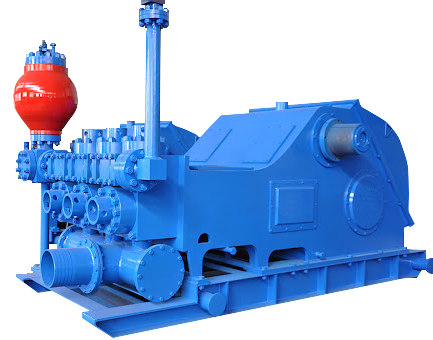
In the oil and gas industry, drilling operations rely heavily on specialized equipment to ensure efficiency, safety, and reliability. One such critical piece of equipment is the mud pump. This high-pressure pump is essential for circulating drilling fluids, commonly known as mud, through the drill string and back to the surface. Mud pumps play a crucial role in drilling operations, helping control well pressure, remove cuttings, and maintain the stability of the borehole. This article provides a comprehensive overview of mud pumps, including their function, types, design, operation, and maintenance practices.
What Is a Mud Pump?
A mud pump is a reciprocating pump used in drilling rigs to circulate drilling fluid under high pressure. Drilling mud performs multiple functions: cooling and lubricating the drill bit, carrying drill cuttings to the surface, and maintaining hydrostatic pressure to prevent well blowouts. The mud pump ensures a continuous and controlled flow of this fluid, which is critical for safe and efficient drilling operations.
Mud pumps are designed to handle high-viscosity fluids, abrasive particles, and high-pressure environments, making them one of the most robust and durable pieces of drilling equipment.
Functions of a Mud Pump
Mud pumps serve several essential functions in drilling operations:
1. Circulating Drilling Fluid
The primary function of a mud pump is to circulate drilling mud from the mud tanks down the drill string and back to the surface through the annular space. This circulation ensures continuous removal of drill cuttings and prevents clogging of the drill bit.
2. Maintaining Wellbore Stability
By controlling the pressure of the drilling fluid, mud pumps help stabilize the wellbore walls. Proper hydrostatic pressure prevents formation fluids from entering the wellbore, reducing the risk of blowouts and cave-ins.
3. Cooling and Lubricating the Drill Bit
The drill bit generates intense heat during drilling. Mud pumps circulate drilling fluid to cool and lubricate the bit, minimizing wear and extending its lifespan.
4. Supporting Drilling Efficiency
By maintaining constant pressure and flow rates, mud pumps improve drilling efficiency. Stable fluid circulation allows the drill to penetrate formations faster and reduces non-productive time.
Types of Mud Pumps
Mud pumps are classified based on their mechanical design, operation, and intended application. The most common types include:
1. Duplex Mud Pump
A duplex mud pump uses two pistons or plungers to move the fluid. Each piston operates independently, providing a smoother flow than single-piston pumps. Duplex pumps are suitable for low to medium-pressure operations and are commonly used in land drilling rigs.
2. Triplex Mud Pump
Triplex mud pumps, the most widely used in the oil and gas industry, have three pistons or plungers. They provide higher pressure and smoother fluid flow compared to duplex pumps. Triplex pumps are preferred for offshore and deep drilling operations due to their reliability, efficiency, and ability to handle high-pressure drilling fluids.
3. Quintuplex Mud Pump
Quintuplex mud pumps use five pistons to deliver even smoother fluid flow with reduced pulsation. These pumps are often used in high-precision drilling operations where constant pressure is critical. They are less common but provide excellent performance in specialized drilling scenarios.
4. Single-Acting vs. Double-Acting
Mud pumps can also be classified as single-acting or double-acting. In single-acting pumps, fluid is displaced during one stroke of the piston, whereas in double-acting pumps, fluid is displaced during both strokes. Double-acting pumps provide a more continuous flow and are ideal for high-volume operations.
Components of a Mud Pump
Mud pumps consist of several key components, each designed to handle the challenging conditions of drilling operations:
1. Crankshaft and Connecting Rod
The crankshaft converts rotary motion from the prime mover (diesel engine or electric motor) into reciprocating motion. Connecting rods link the crankshaft to the pistons or plungers.
2. Pistons or Plungers
Pistons (in duplex or triplex pumps) or plungers (in high-pressure pumps) move back and forth to displace drilling fluid. They are often made from durable materials like hardened steel or chrome-plated alloy to withstand abrasive fluids.
3. Cylinder Liners
The cylinder liner houses the pistons and ensures smooth operation. Liners are designed to resist wear from abrasive drilling fluids and high-pressure conditions.
4. Suction and Discharge Valves
These valves control fluid flow into and out of the pump. Suction valves allow drilling mud to enter the cylinder, while discharge valves ensure it exits at the required pressure. Valve performance is critical for maintaining pump efficiency and preventing leakage.
5. Fluid End and Power End
The fluid end refers to the components in contact with drilling fluid, including pistons, liners, and valves. The power end consists of the crankshaft, connecting rods, and bearings. Proper maintenance of both ends is essential for pump longevity.
Operating Principles of a Mud Pump
Mud pumps operate on a reciprocating principle. Here’s how they work:
-
The crankshaft converts rotary motion from the motor or engine into linear motion via connecting rods.
-
The piston or plunger moves back and forth within the cylinder liner.
-
During the suction stroke, the piston pulls drilling fluid from the mud tank into the cylinder through the suction valve.
-
During the discharge stroke, the piston pushes the fluid out of the discharge valve into the drill string.
-
The cycle repeats continuously, maintaining a constant flow of drilling fluid.
Triplex and quintuplex pumps provide smoother flow by overlapping the strokes of multiple pistons, reducing pulsation and vibration in the system.
Applications of Mud Pumps
Mud pumps are vital in various applications within the oil and gas sector:
1. Oil and Gas Drilling
The primary application is circulating drilling fluids in land and offshore drilling rigs. They help maintain wellbore pressure, remove cuttings, and support high-pressure drilling operations.
2. Geothermal Drilling
Mud pumps are used in geothermal drilling to circulate high-temperature drilling fluids, which help manage heat and maintain borehole stability.
3. Mining Operations
In some mining applications, mud pumps circulate slurry and other fluids to support drilling and excavation operations.
4. Water Well Drilling
Mud pumps assist in water well drilling by circulating mud or water-based fluids to remove cuttings and maintain borehole integrity.
Maintenance and Safety Considerations
Proper maintenance is crucial for mud pump performance and safety:
1. Regular Inspection
-
Check pistons, liners, and valves for wear or damage.
-
Inspect bearings and crankshaft alignment.
-
Monitor seals and packing for leakage.
2. Lubrication
Lubricate the power end according to manufacturer specifications to reduce friction and prevent overheating.
3. Pressure Monitoring
Maintain proper operating pressure to prevent overloading the pump or damaging the drill string. Pressure gauges and sensors should be regularly calibrated.
4. Wear Part Replacement
Replace worn-out pistons, liners, and valves promptly to maintain efficiency and prevent pump failure.
5. Safety Protocols
Ensure proper training for operators. High-pressure drilling fluids can be dangerous, and pump failure can lead to hazardous conditions on the rig.
Advancements in Mud Pump Technology
Modern mud pumps incorporate advanced features to improve efficiency, reliability, and monitoring:
-
Variable-speed drives for precise flow control and energy savings.
-
Digital monitoring systems to track performance, pressure, and maintenance needs in real time.
-
Enhanced materials such as tungsten carbide or composite coatings to extend component life.
-
Noise and vibration reduction technologies to improve operator comfort and equipment lifespan.
These innovations make mud pumps more durable, efficient, and safer to operate in demanding drilling environments.
Conclusion
The mud pump is a cornerstone of drilling operations, providing essential functions such as circulating drilling fluids, maintaining wellbore pressure, and cooling the drill bit. Understanding the types, components, operating principles, and applications of mud pumps is critical for engineers, rig operators, and maintenance personnel.
Proper maintenance, monitoring, and adherence to safety protocols ensure mud pumps perform reliably, reduce downtime, and extend equipment life. As technology advances, modern mud pumps are becoming more efficient, durable, and intelligent, further supporting the demanding needs of the oil, gas, and mining industries.
For anyone involved in drilling operations, a deep understanding of mud pumps is not optional—it is essential for operational efficiency, safety, and long-term success.