Introduction
In the modern digital economy, data has become one of the most valuable resources for organizations. Businesses no longer rely only on physical assets or traditional infrastructure to gain a competitive edge—today, success is driven by how effectively companies collect, manage, and use information. This shift has given rise to a powerful model known as Data as a Service (DaaS).
Data as a Service allows organizations to access high-quality data on demand through cloud-based platforms without the need to manage complex storage systems or infrastructure. It transforms raw information into a readily available resource that can be delivered anywhere, anytime. From small startups to global enterprises, DaaS is reshaping the way decisions are made and strategies are built.
What Is Data as a Service (DaaS)?
Data as a Service is a cloud-based model in which data is:
-
Collected
-
Processed
-
Stored
-
Delivered
through online platforms to users who need it.
Instead of maintaining large databases and servers, businesses can subscribe to data services and access updated information in real time. This makes data more accessible, scalable, and cost-efficient.
DaaS works in a similar way to other cloud services such as:
-
Software as a Service (SaaS)
-
Infrastructure as a Service (IaaS)
-
Platform as a Service (PaaS)
However, its focus is entirely on delivering structured and usable data.
How DaaS Works
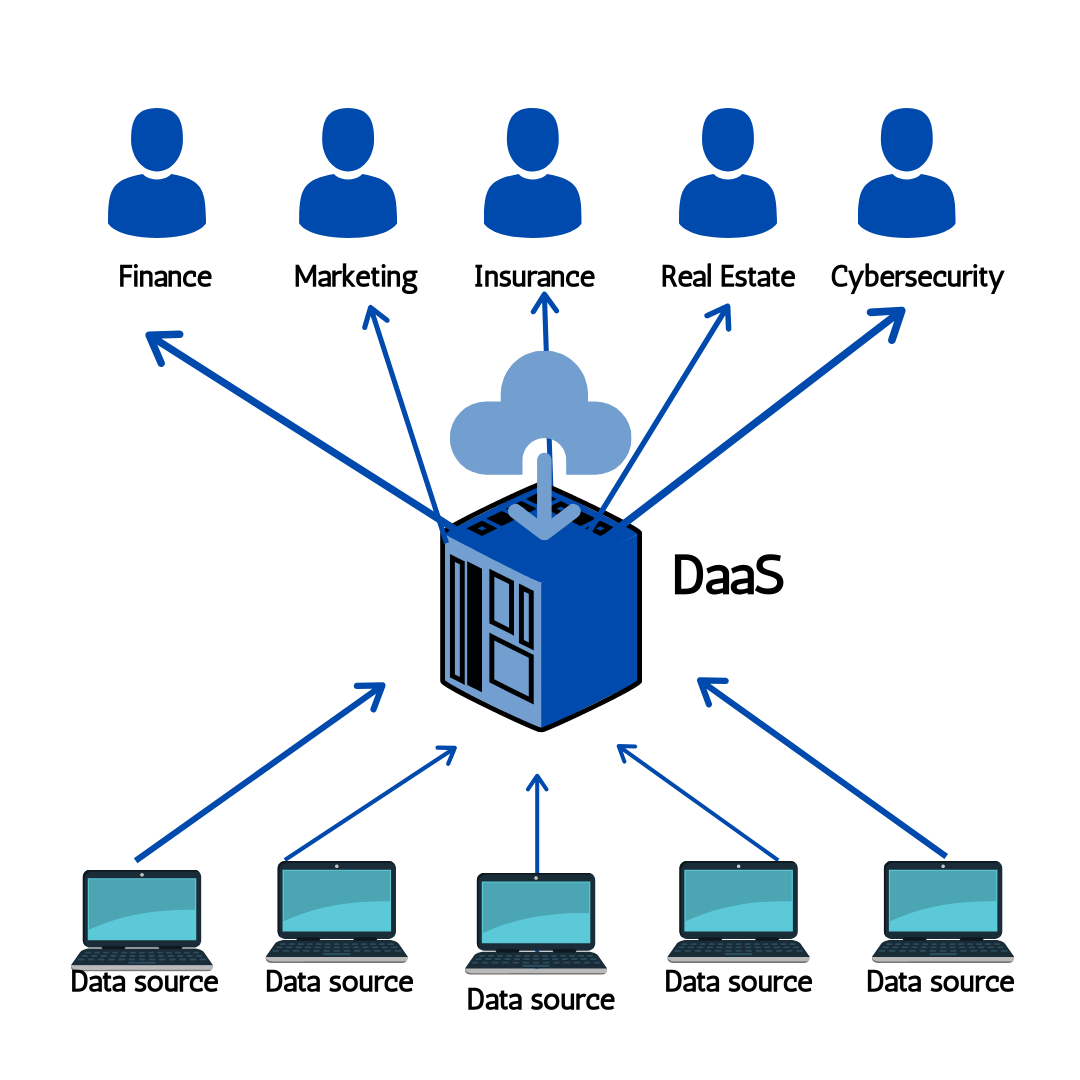
The DaaS model is built on cloud technology and APIs (Application Programming Interfaces). Here is a simplified process:
-
Data Collection – Information is gathered from multiple sources such as websites, sensors, business systems, or public databases.
-
Data Processing – The raw data is cleaned, organized, and structured.
-
Cloud Storage – The processed data is stored securely in the cloud.
-
Data Delivery – Users access the data through dashboards, applications, or APIs.
This process removes the need for businesses to handle complex backend operations.
Key Features of Data as a Service
1. On-Demand Access
Users can access data whenever they need it without waiting for manual reports.
2. Scalability
Organizations can scale their data usage up or down based on their needs.
3. Cost Efficiency
There is no need to invest heavily in hardware, storage, or maintenance.
4. Real-Time Updates
DaaS platforms provide continuously updated data, which is essential for fast decision-making.
5. Accessibility
Data can be accessed from anywhere in the world using internet-enabled devices.
Why DaaS Is Important for Modern Businesses
In a fast-moving market, companies must make quick and accurate decisions. DaaS supports this by providing:
-
Reliable market insights
-
Customer behavior analysis
-
Financial forecasting data
-
Operational performance metrics
This leads to better planning, improved efficiency, and increased profitability.
Business Applications of DaaS
Marketing and Customer Insights
Companies use DaaS to:
-
Analyze customer preferences
-
Track buying patterns
-
Personalize advertising campaigns
This helps create more targeted and effective marketing strategies.
Finance and Risk Management
Financial institutions use real-time data to:
-
Detect fraud
-
Evaluate credit risk
-
Monitor market trends
Healthcare
In healthcare, DaaS enables:
-
Patient data integration
-
Medical research analysis
-
Predictive diagnostics
Retail and E-Commerce
Retailers use DaaS for:
-
Inventory forecasting
-
Price optimization
-
Demand prediction
Smart Cities
Governments and urban planners use data services to manage:
-
Traffic systems
-
Energy consumption
-
Public safety
Benefits of Data as a Service
Faster Decision-Making
With real-time access to accurate data, businesses can respond quickly to market changes.
Improved Collaboration
Teams across different locations can work with the same data simultaneously.
Better Data Quality
DaaS providers ensure that data is:
-
Clean
-
Structured
-
Consistent
Reduced IT Burden
Companies do not need large in-house IT teams to manage databases.
Enhanced Innovation
Easy access to data encourages experimentation and new product development.
Challenges of DaaS
While DaaS offers many advantages, there are also challenges.
Data Security
Sensitive information must be protected through:
-
Encryption
-
Access control
-
Compliance with regulations
Data Privacy
Organizations must ensure that personal data is used ethically and legally.
Dependence on Internet Connectivity
Since DaaS is cloud-based, stable internet access is essential.
Integration Issues
Combining external data services with existing internal systems can sometimes be complex.
DaaS vs Traditional Data Management
| Traditional Data Systems | Data as a Service |
|---|---|
| High infrastructure cost | Subscription-based model |
| Manual updates | Real-time data delivery |
| Limited scalability | Highly scalable |
| Location-dependent access | Accessible from anywhere |
| Complex maintenance | Managed by provider |
This comparison shows why many organizations are moving toward DaaS solutions.
The Role of APIs in DaaS
APIs act as the bridge between users and data. They allow applications to:
-
Request specific data
-
Receive instant responses
-
Integrate data into workflows
For example, a travel app can use DaaS to fetch:
-
Weather updates
-
Flight data
-
Hotel pricing
in real time.
DaaS and Artificial Intelligence
Artificial intelligence and machine learning rely heavily on data. DaaS provides:
-
Large datasets for training models
-
Real-time inputs for predictions
-
Continuous learning opportunities
This combination enables:
-
Smart recommendations
-
Automated decision-making
-
Predictive analytics
The Future of Data as a Service
The importance of DaaS will continue to grow as businesses become more data-driven.
Future developments may include:
Industry-Specific Data Platforms
Customized data services for sectors like healthcare, agriculture, and logistics.
Edge Computing Integration
Faster data processing closer to the source for real-time applications.
More Advanced Data Marketplaces
Companies will be able to buy and sell data securely.
Stronger Data Governance
Improved regulations and tools for ethical data use.
Who Uses DaaS?
Data as a Service is valuable for:
-
Startups that lack infrastructure
-
Enterprises that need scalability
-
Researchers and analysts
-
Developers building data-driven applications
-
Government organizations
It levels the playing field by giving small businesses access to the same quality of data as large corporations.
How to Adopt DaaS Successfully
Organizations planning to use DaaS should:
-
Define clear data goals
-
Choose a reliable provider
-
Ensure security compliance
-
Train employees to use data effectively
-
Integrate DaaS with existing systems
This ensures maximum value from the service.
Conclusion
Data as a Service is transforming the way the world uses information. By making high-quality data accessible, scalable, and affordable, it allows organizations to focus on innovation rather than infrastructure.
In a world where decisions must be made quickly and accurately, DaaS provides the foundation for smarter strategies, better customer experiences, and stronger business growth.