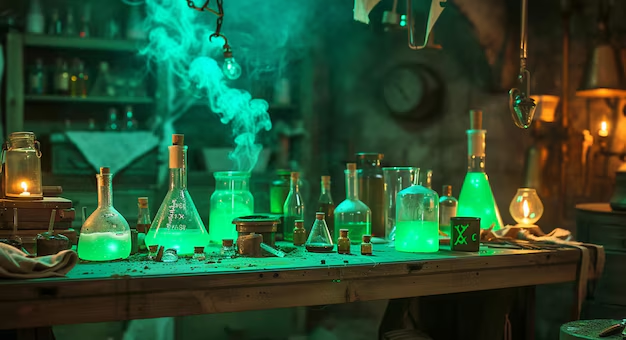
The phrase “haunted lab” instantly evokes images of flickering lights, abandoned corridors, broken equipment humming back to life, and shadows moving where no one should be. Unlike haunted houses or ancient castles, a haunted laboratory feels disturbingly modern. It is a place once dedicated to discovery, logic, and progress—now transformed into a setting of mystery, fear, and unanswered questions. This contrast between scientific purpose and paranormal legend is what makes haunted labs so compelling.
This article explores the origins, psychology, real-world inspirations, and cultural impact of haunted labs, revealing why these eerie research spaces continue to fascinate and frighten people across the world.
What Defines a Haunted Lab?
A haunted lab is typically an abandoned or decommissioned scientific, medical, or industrial research facility believed to be affected by unexplained or paranormal activity. These locations may include:
-
Medical research laboratories
-
University science buildings
-
Military or government research facilities
-
Private experimental labs
-
Underground or restricted research sites
What sets haunted labs apart is not just the presence of ghost stories, but the idea that something went wrong. Experiments failed, ethics were ignored, or tragedy struck—leaving behind an atmosphere heavy with unease.
Why Laboratories Feel Unnaturally Creepy
Even active laboratories can feel unsettling. Sterile environments, harsh lighting, warning signs, and unfamiliar equipment naturally create tension. When a lab is abandoned, these elements become magnified.
Several psychological factors contribute to the fear:
-
Sterility and silence
Empty labs lack warmth, making them feel lifeless and unnatural. -
Unfamiliar technology
Old machines, wires, and chemical symbols appear threatening when their purpose is unknown. -
Isolation
Many labs are built away from populated areas, heightening vulnerability. -
Hidden history
Restricted access fuels the belief that secrets were kept inside.
When people enter such spaces, their brains instinctively search for danger, making ordinary sounds or shadows feel ominous.
Historical Origins of Haunted Lab Legends
Many haunted lab stories have roots in real events. During the rapid scientific expansion of the 19th and 20th centuries, safety standards and ethical guidelines were not always prioritized.
Documented historical issues include:
-
Dangerous chemical exposure
-
Radiation accidents
-
Experimental medical treatments
-
Psychological testing with lasting harm
-
Military research conducted in secrecy
When facilities associated with such events are abandoned, legends often grow. The suffering tied to these places becomes the foundation for paranormal tales, even when no evidence of hauntings exists.
Famous Types of Haunted Labs
While specific locations vary, haunted labs generally fall into a few categories.
Abandoned Medical Labs
Former hospital research wings often inspire stories of ghostly patients, phantom footsteps, or cries heard at night. These tales are usually tied to tragic deaths or controversial treatments.
Military and Government Facilities
Decommissioned military labs are among the most notorious. Classified work, sealed rooms, and sudden closures fuel rumors of dangerous experiments and lingering spirits.
University Science Buildings
Old chemistry, anatomy, or physics labs on college campuses frequently become hotspots for ghost stories passed down through generations of students.
Industrial Research Facilities
Defunct factories and corporate labs can appear eerie due to their scale, machinery, and abrupt abandonment.
Urban Exploration and Haunted Labs
Urban explorers play a major role in modern haunted lab mythology. These individuals venture into abandoned places to document decay and forgotten history.
Inside labs, explorers often encounter:
-
Broken glassware scattered across floors
-
Warning labels still intact on doors
-
Rusted equipment left mid-experiment
-
Faded notes and diagrams on walls
The unsettling visuals, combined with echoes, temperature changes, and unexpected noises, often lead explorers to report paranormal experiences. Once shared online, these stories spread rapidly, strengthening the haunted lab legend.
Science-Based Explanations for Paranormal Experiences
Despite chilling accounts, most phenomena reported in haunted labs have logical explanations:
-
Cold spots result from poor insulation or underground airflow
-
Strange noises come from metal expansion, animals, or wind
-
Flickering lights are caused by failing electrical systems
-
Feelings of dread stem from anxiety and unfamiliar environments
However, understanding these explanations does not always diminish fear. The human brain is wired to prioritize survival, often interpreting ambiguity as threat.
The Power of Expectation and Fear
Psychologists emphasize the role of expectation in paranormal experiences. If someone enters a lab believing it is haunted, their senses become hyper-alert.
This leads to:
-
Heightened awareness of minor sounds
-
Misinterpretation of shadows or reflections
-
Increased emotional responses to normal stimuli
In an abandoned lab, where danger once existed, the mind fills in the gaps—turning uncertainty into fear.
Haunted Labs in Pop Culture
Haunted labs are a staple in horror and science fiction. They appear frequently in:
-
Movies involving failed experiments
-
Video games featuring abandoned research facilities
-
Novels exploring ethical boundaries of science
-
Television series about secret government projects
In fiction, haunted labs often symbolize humanity’s fear of knowledge without restraint. They serve as cautionary tales about pushing boundaries too far.
Moral and Ethical Symbolism
Beyond fear, haunted labs represent unresolved ethical questions. They remind society of times when progress came at a cost. Even without ghosts, the emotional weight of these spaces lingers.
They ask difficult questions:
-
Should all scientific progress be pursued?
-
Who is responsible when experiments cause harm?
-
Can knowledge justify suffering?
In this sense, haunted labs are haunted not by spirits, but by history.
Visiting or Exploring Haunted Labs Safely
While curiosity is natural, abandoned labs pose real dangers. Hazards may include:
-
Structural instability
-
Toxic chemicals or radiation
-
Sharp debris
-
Legal consequences for trespassing
Anyone considering exploration should prioritize safety, legality, and respect for the site’s history. The true risks are often physical rather than paranormal.
Why the Haunted Lab Concept Endures
Haunted labs continue to capture attention because they blend modern reality with ancient fear. Unlike medieval ruins, labs are symbols of intelligence and control. When they become places of fear, that contradiction feels deeply unsettling.
They remind us that science, while powerful, is not immune to error—and that progress leaves shadows behind.
Conclusion
The idea of a haunted lab exists at the crossroads of science, psychology, history, and imagination. While most alleged hauntings can be explained logically, the stories endure because they reflect real anxieties about secrecy, ethics, and the unknown.
Haunted labs are not just about ghosts in abandoned buildings. They are reminders of humanity’s complex relationship with knowledge—where discovery can inspire wonder, but also fear. And perhaps that lingering tension is what truly haunts these forgotten halls.