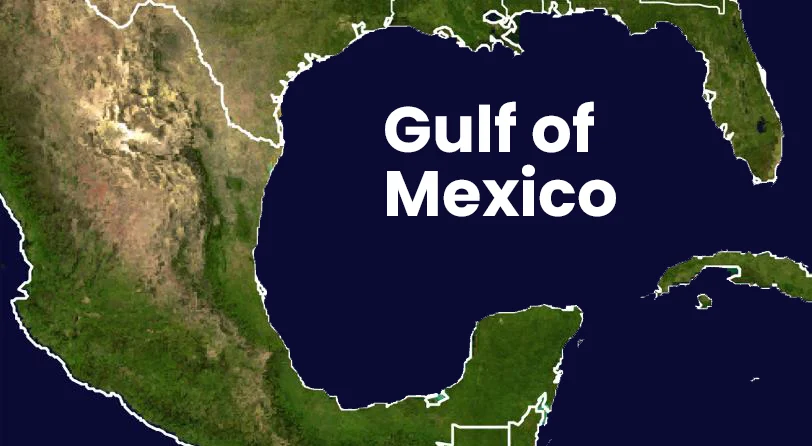
The Gulf of Mexico is one of the most important and recognizable bodies of water in the world. Bordered by the United States, Mexico, and Cuba, it has played a vital role in trade, exploration, and cultural exchange for centuries. Yet despite its prominence, many people rarely stop to ask a simple question: how did the Gulf of Mexico get its name?
The answer lies in a fascinating blend of indigenous history, Spanish exploration, colonial influence, and linguistic evolution. Understanding the origin of the name requires a journey back to the early civilizations of Mesoamerica and forward through the age of European discovery.
The Indigenous Roots: The Mexica and Their Identity
The story of the Gulf’s name begins long before European explorers arrived in the Americas. Central to this history is the Mexica people, more commonly known today as the Aztecs. The Mexica were a dominant civilization in what is now central Mexico, particularly in and around their capital, Tenochtitlán.
The term “Mexico” itself is derived from the word “Mexica.” While scholars debate its precise meaning, it is generally understood to be linked to the Mexica people’s identity, their patron deity, or their geographic origins. Over time, the name “Mexico” came to represent not just the people, but also the land they inhabited.
When European explorers arrived, they encountered this already established name and began using it to refer to the region.
Spanish Exploration and Naming Conventions
The naming of the Gulf is closely tied to the arrival of Spanish explorers in the early 16th century. Figures such as Hernán Cortés and earlier expeditions sent by Spain began mapping the coastline of the newly encountered lands.
Spanish explorers typically named geographic features based on nearby territories, indigenous names, or notable events. As they explored the vast body of water bordering the land known as Mexico, it became natural for them to refer to it as the “Gulf of Mexico,” or in Spanish, Golfo de México.
At the time, Spain had established the colony of New Spain, which included much of present-day Mexico and surrounding areas. The Gulf served as a crucial maritime route connecting Spain to its colonies, making it both strategically and economically significant.
Early Maps and Documentation
The name “Gulf of Mexico” began appearing on European maps as early as the 16th century. Cartographers played a major role in standardizing geographic names, and once a term gained usage, it often became widely accepted.
Maps produced in Spain and other parts of Europe consistently labeled the body of water as the Gulf of Mexico, reinforcing the association between the sea and the landmass of Mexico. Over time, this naming convention spread to other languages and regions.
It is worth noting that earlier indigenous civilizations did not necessarily have a single unified name for the entire Gulf. Instead, they referred to specific coastal areas or regions. The concept of naming the entire body of water as one entity was largely a European practice.
Why “Mexico” and Not Another Name?
One might wonder why the Gulf was named after Mexico rather than another bordering region, such as the southeastern United States or Cuba. The answer lies in historical context.
At the time the Gulf was named, Spain’s primary foothold in the region was in Mexico. The area was the center of Spanish administration and culture in the Americas. As a result, Mexico held greater prominence in the minds of European explorers and mapmakers.
Additionally, much of the early exploration of the Gulf’s coastline focused on the Mexican side. This further strengthened the association between the body of water and the land.
Even though the Gulf borders multiple countries today, the name “Gulf of Mexico” reflects the historical dominance of Mexico in the region during the period of European exploration.
The Role of Colonial Influence
Colonial powers had a significant impact on the naming of geographic features around the world. In many cases, indigenous names were replaced or adapted to fit European languages and perspectives.
In the case of the Gulf of Mexico, the name represents a blend of indigenous and colonial influences. The word “Mexico” itself has indigenous origins, while the naming of the Gulf as a unified body of water reflects European mapping practices.
This combination is a common pattern in geographic naming, where local terms are incorporated into broader frameworks established by colonizers.
Cultural and Economic Significance of the Gulf
The Gulf of Mexico has been more than just a geographic feature—it has been a hub of activity for centuries. Its warm waters and strategic location have made it vital for trade, fishing, and transportation.
During the colonial era, the Gulf served as a key route for ships traveling between Europe and the Americas. Goods such as silver, sugar, and spices were transported across its waters, shaping the global economy.
In modern times, the Gulf remains important for industries such as النفط (oil) and natural gas production, as well as tourism and marine biodiversity. Its name, therefore, is not just a label but a reflection of its enduring importance.
Linguistic Evolution and Global Recognition
Over time, the name “Gulf of Mexico” has been adopted in numerous languages, each with its own variation. Despite these differences, the core reference to Mexico remains consistent.
This widespread usage highlights the power of early naming conventions. Once a name becomes established in maps, literature, and official documents, it tends to persist across generations.
Today, the Gulf of Mexico is recognized globally, and its name is deeply embedded in geography, history, and culture.
Misconceptions and Alternate Theories
While the origin of the name is relatively well-documented, there are occasional misconceptions. Some people assume that the Gulf was named by the United States or that it reflects modern political boundaries.
In reality, the name predates the existence of the United States as an independent nation. It was established during a time when European powers dominated the region.
There are also no widely accepted alternate names for the Gulf in historical records. While local communities may have had their own terms for specific areas, the name “Gulf of Mexico” has been the dominant designation for centuries.
A Name That Reflects History
The name “Gulf of Mexico” serves as a reminder of the region’s layered history. It reflects the presence of indigenous civilizations, the impact of European exploration, and the evolution of global geography.
It also illustrates how names can carry meaning beyond their literal definitions. In this case, the name connects a vast body of water to a rich cultural and historical heritage.
Conclusion
The Gulf of Mexico did not receive its name by chance. It is the result of centuries of history, shaped by the Mexica people, Spanish explorers, and the practices of early cartographers. The name reflects the prominence of Mexico during the era of European exploration and has endured as a global geographic standard.
Today, the Gulf of Mexico stands as a testament to the interconnectedness of cultures, histories, and landscapes. Its name is a bridge between the past and the present, reminding us of the journeys, encounters, and transformations that have shaped our world.
By understanding how the Gulf of Mexico got its name, we gain insight not only into a specific geographic feature but also into the broader processes that define how places are named and remembered.