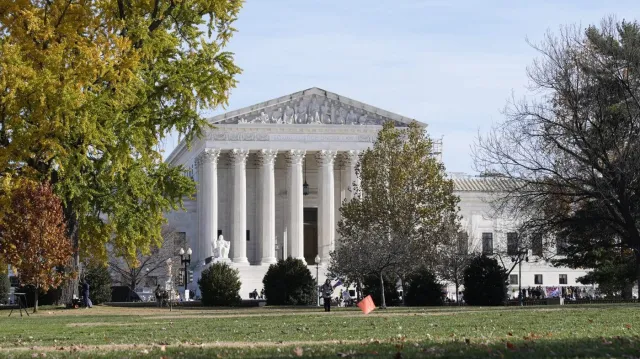
In a decision that underscores the ongoing tension between executive authority and judicial oversight, the Supreme Court of the United States has rejected a bid by Donald Trump to freeze foreign aid. The ruling carries significant implications not only for U.S. domestic governance but also for international relations, humanitarian programs, and the broader framework of constitutional law.
This development highlights the complex balance of power in American democracy and raises important questions about how far a president can go in using executive authority to influence foreign policy decisions.
Background of the Case
The controversy centers on efforts by Donald Trump to halt or redirect foreign aid funds allocated by Congress. During his presidency, Trump frequently sought to leverage foreign aid as a tool to achieve political and diplomatic goals. Critics argued that these actions sometimes blurred the line between legitimate policy decisions and political maneuvering.
The specific bid rejected by the Supreme Court involved an attempt to freeze certain foreign aid disbursements, potentially affecting countries reliant on U.S. assistance for economic development, security cooperation, and humanitarian relief.
Opponents of the move contended that such a freeze would violate congressional authority, as the U.S. Constitution grants Congress the power of the purse. By attempting to withhold funds already approved by lawmakers, the executive branch risked overstepping its constitutional boundaries.
The Supreme Court’s Decision
In rejecting Trump’s bid, the Supreme Court reaffirmed the principle that the executive branch cannot unilaterally override congressional decisions on spending. While the Court did not necessarily rule on every aspect of executive discretion in foreign policy, it made clear that freezing funds without proper legal justification is not permissible.
The decision reflects a broader judicial philosophy that emphasizes checks and balances. The Court’s ruling signals that even in areas traditionally dominated by the executive—such as foreign affairs—there are limits imposed by the Constitution.
Legal experts note that the ruling reinforces longstanding precedents regarding the separation of powers. It also sends a message that attempts to circumvent Congress, especially in matters of appropriated funds, will face significant judicial scrutiny.
Constitutional and Legal Implications
At the heart of the case is the interpretation of constitutional authority. The U.S. Constitution divides power among three branches of government: legislative, executive, and judicial. Congress is responsible for creating laws and allocating funds, while the president is tasked with implementing those laws.
The attempt to freeze foreign aid raised questions about whether the executive branch can refuse to spend money that Congress has explicitly authorized. The Supreme Court’s decision suggests that such actions are limited and must be justified within a clear legal framework.
This ruling may have long-term implications for future administrations. Presidents often seek flexibility in foreign policy, including the ability to adjust aid based on changing circumstances. However, the Court’s decision indicates that this flexibility is not unlimited.
Political Context and Reactions
The ruling has generated strong reactions across the political spectrum. Supporters of Trump argue that the president should have broad authority to conduct foreign policy, including decisions about how and when to distribute aid. They contend that such powers are essential for responding to international challenges and protecting national interests.
Critics, on the other hand, view the decision as a necessary check on executive overreach. They argue that allowing a president to freeze congressionally approved funds could undermine democratic accountability and lead to the politicization of foreign aid.
The case also reflects broader political divisions in the United States. Debates over foreign aid often intersect with questions about national priorities, fiscal responsibility, and the role of the U.S. on the global stage.
Impact on Foreign Aid Programs
Foreign aid plays a critical role in U.S. international policy. It supports a wide range of initiatives, including disaster relief, public health programs, economic development, and military assistance to allied nations.
A freeze on such aid could have far-reaching consequences. Many countries rely on U.S. assistance to address urgent challenges such as poverty, disease, and conflict. Interruptions in funding can disrupt ongoing projects, weaken partnerships, and create uncertainty for both governments and non-governmental organizations.
By rejecting the bid to freeze aid, the Supreme Court has helped ensure continuity in these programs. The decision provides reassurance to international partners that U.S. commitments are not easily subject to abrupt changes based on political considerations.
Global Implications
The ruling also carries significant global implications. The United States is one of the largest providers of foreign aid in the world, and its policies have a substantial impact on international development and security.
A decision allowing the executive branch to freeze aid could have introduced instability into global systems. Allies might question the reliability of U.S. commitments, while adversaries could exploit the resulting uncertainty.
By upholding the role of Congress, the Supreme Court has reinforced the predictability of U.S. foreign policy. This predictability is crucial for maintaining trust and cooperation on the international stage.
Historical Context
This case is not the first time tensions have arisen over the control of federal funds. Throughout U.S. history, there have been disputes between the executive and legislative branches بشأن spending authority.
One notable example is the concept of “impoundment,” where a president refuses to spend funds appropriated by Congress. This practice was curtailed by legislation in the 1970s, which established procedures to limit executive discretion in withholding funds.
The Supreme Court’s recent decision can be seen as part of this ongoing historical narrative. It reinforces the principle that the power of the purse ultimately resides with Congress.
Broader Lessons for Governance
Beyond its immediate impact, the case offers broader lessons about governance and the rule of law. It illustrates the importance of institutional checks and balances in preventing the concentration of power.
The decision also highlights the role of the judiciary as an arbiter of constitutional disputes. By interpreting the law and resolving conflicts between branches of government, the courts play a crucial role in maintaining the stability of the political system.
For policymakers, the ruling serves as a reminder that actions must align with legal and constitutional frameworks. Even well-intentioned policies can face challenges if they exceed established authority.
The Road Ahead
Looking forward, the implications of this decision will likely continue to unfold. Future administrations may approach foreign aid with greater caution, mindful of the legal constraints emphasized by the Supreme Court.
At the same time, debates over executive power and congressional authority are unlikely to disappear. As global challenges evolve, so too will the need for clear and effective governance.
The ruling may also influence how Congress drafts legislation related to foreign aid. Lawmakers could seek to clarify the conditions under which funds can be withheld or redirected, reducing the potential for future conflicts.
Conclusion
The rejection of Donald Trump’s bid to freeze foreign aid by the Supreme Court of the United States represents a significant moment in the ongoing evolution of American constitutional law. It reaffirms the central role of Congress in controlling federal spending while setting limits on executive authority.
The decision carries important implications for domestic governance, international relations, and the future of U.S. foreign policy. By upholding the principles of checks and balances, the Court has reinforced the foundations of democratic accountability.
Ultimately, the case serves as a reminder that the strength of a political system lies not only in its ability to act decisively but also in its commitment to the rule of law. In navigating the complexities of modern governance, this balance remains essential for ensuring both stability and justice.