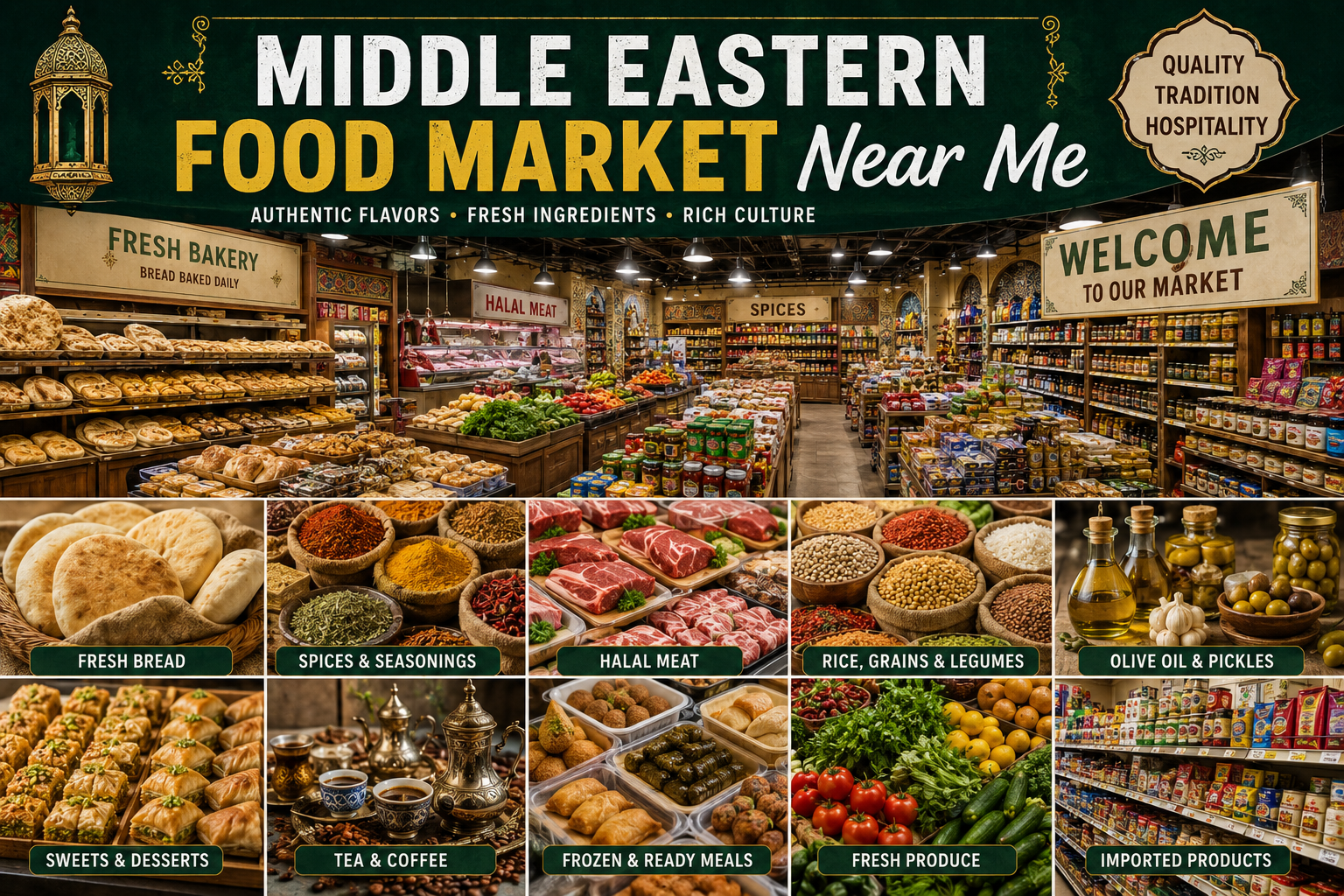
Searching for a “Middle Eastern food market near me” is more than just looking for a grocery store. It is often the beginning of a culinary adventure filled with rich aromas, vibrant spices, fresh ingredients, and centuries-old traditions. Middle Eastern markets offer a unique shopping experience that combines food, culture, hospitality, and history in one place.
From freshly baked pita bread and aromatic shawarma spices to imported olive oils and colorful sweets, Middle Eastern food markets have become increasingly popular around the world. These stores serve not only Middle Eastern communities but also food lovers eager to explore authentic flavors from countries such as Lebanon, تركيا, Egypt, Syria, Jordan, Iran, Iraq, and Palestine.
In this article, we will explore what makes Middle Eastern food markets special, what products you can find there, why they are growing in popularity, and how to choose the best market near you.
What Is a Middle Eastern Food Market?
A Middle Eastern food market is a grocery store or specialty market that focuses on foods, spices, beverages, meats, breads, and cultural products from Middle Eastern countries.
These markets range from small neighborhood shops to large international supermarkets filled with imported goods. Many also include:
- Fresh bakeries
- Halal meat counters
- Restaurants or cafes
- Sweet shops
- Tea and coffee sections
- Fresh produce areas
Unlike standard supermarkets, Middle Eastern markets often emphasize freshness, handmade foods, and authentic regional ingredients.
Why Middle Eastern Food Markets Are Becoming Popular
The popularity of Middle Eastern cuisine has grown significantly in recent years. Several factors are driving this trend.
Growing Interest in Global Cuisine
People are becoming more adventurous with food and enjoy trying international flavors. Social media, cooking shows, and travel content have introduced millions of people to Middle Eastern dishes.
Foods like hummus, falafel, shawarma, kebabs, and baklava are now widely recognized around the world.
Health Benefits
Many Middle Eastern foods are considered healthy because they include:
- Olive oil
- Fresh vegetables
- Lean meats
- Legumes
- Yogurt
- Nuts
- Herbs and spices
The Mediterranean-style eating patterns associated with Middle Eastern cuisine are often praised for supporting heart health and balanced nutrition.
Cultural Diversity
As Middle Eastern communities grow globally, demand for authentic ingredients and traditional foods continues increasing. Markets help immigrants stay connected to their culinary heritage while introducing local residents to new experiences.
What You Can Find in a Middle Eastern Food Market
One of the most exciting parts of visiting a Middle Eastern market is discovering products not commonly found in regular grocery stores.
Fresh Bread and Bakery Items
Bread is central to Middle Eastern cuisine. Most markets sell fresh bread daily.
Popular options include:
- Pita bread
- Lavash
- Manakish
- Samoon
- Ka’ak
- Flatbreads
Some bakeries prepare bread in traditional stone ovens, giving it authentic flavor and texture.
Spices and Seasonings
Middle Eastern cooking relies heavily on spices and aromatic blends.
Common spices include:
- Sumac
- Za’atar
- Cardamom
- Cumin
- Coriander
- Turmeric
- Aleppo pepper
- Saffron
These spices add deep flavor to meats, rice dishes, soups, and vegetables.
Halal Meat
Many Middle Eastern food markets include halal butcher sections.
Popular meats include:
- Lamb
- Beef
- Chicken
- Goat
Butchers may also prepare marinated kebabs, kofta, shawarma meat, and other ready-to-cook specialties.
Rice, Grains, and Legumes
Staple ingredients are often sold in large quantities.
Common products include:
- Basmati rice
- Bulgur wheat
- Lentils
- Chickpeas
- Freekeh
- Couscous
These ingredients form the foundation of many traditional dishes.
Olive Oil and Pickled Foods
Middle Eastern cuisine is famous for high-quality olive oils and preserved foods.
Markets often stock:
- Imported olive oils
- Pickled turnips
- Olives
- Stuffed grape leaves
- Pickled cucumbers
- Preserved lemons
These products add flavor and authenticity to meals.
Sweets and Desserts
Dessert sections are often among the most colorful areas of Middle Eastern markets.
Popular sweets include:
- Baklava
- Kunafa
- Maamoul
- Turkish delight
- Halva
- Basbousa
These desserts frequently feature pistachios, honey, dates, rosewater, and syrup.
Tea and Coffee
Middle Eastern hospitality often revolves around tea and coffee.
Many markets sell:
- Turkish coffee
- Arabic coffee
- Mint tea
- Cardamom coffee
- Herbal blends
Traditional serving sets and coffee pots may also be available.
Frozen and Ready-to-Eat Foods
Busy shoppers appreciate convenient frozen options such as:
- Falafel
- Sambousek
- Kebabs
- Meat pies
- Stuffed vegetables
Prepared foods make it easy to enjoy authentic meals at home.
Popular Middle Eastern Dishes You Can Make
Shopping at a Middle Eastern food market opens the door to countless traditional recipes.
Hummus
Made from chickpeas, tahini, olive oil, garlic, and lemon juice, hummus is one of the world’s most popular Middle Eastern foods.
Falafel
These crispy fried chickpea or fava bean patties are often served in pita bread with vegetables and tahini sauce.
Shawarma
Thinly sliced marinated meat cooked on a vertical rotisserie, shawarma is widely loved for its bold flavor.
Kebabs
Grilled meat skewers seasoned with spices remain a staple throughout the region.
Tabbouleh
This refreshing salad combines parsley, tomatoes, bulgur, lemon juice, and olive oil.
Mansaf
A traditional Jordanian rice and lamb dish flavored with fermented yogurt sauce.
The Cultural Experience of Shopping
Middle Eastern food markets offer more than groceries. They often create a welcoming cultural atmosphere.
Warm Hospitality
Customer service in many Middle Eastern stores emphasizes friendliness and hospitality.
Shop owners frequently:
- Offer food samples
- Recommend recipes
- Explain unfamiliar products
- Share cooking advice
Community Gathering Places
Many markets become social centers where people gather, drink tea, and discuss community events.
Traditional Music and Decor
The atmosphere may include:
- Arabic music
- Decorative lanterns
- Cultural artwork
- Traditional cooking tools
This immersive experience makes shopping more enjoyable and memorable.
How to Find the Best Middle Eastern Food Market Near You
If you are searching online for “Middle Eastern food market near me,” several strategies can help you find quality stores.
Read Online Reviews
Customer reviews often reveal:
- Product freshness
- Pricing
- Cleanliness
- Customer service
- Authenticity
Look for markets with strong reputations within local communities.
Check Product Variety
The best markets usually carry a wide selection of imported goods and fresh ingredients.
Visit During Busy Hours
Crowded markets often indicate freshness and popularity. Fresh bread, meat, and prepared foods move quickly in busy stores.
Explore Prepared Food Sections
Markets with active deli or prepared food areas often maintain high culinary standards.
Ask Staff for Recommendations
Employees can guide you toward popular products and cooking tips.
Why Middle Eastern Markets Support Small Businesses
Many Middle Eastern grocery stores are family-owned businesses that contribute significantly to local economies.
These businesses often:
- Import specialty products
- Create local jobs
- Preserve cultural traditions
- Support immigrant communities
- Introduce diverse foods to wider audiences
Shopping locally helps sustain these valuable community resources.
The Role of Middle Eastern Markets in Food Trends
Middle Eastern flavors are influencing global food trends more than ever.
Ingredients such as:
- Tahini
- Harissa
- Za’atar
- Pomegranate molasses
- Labneh
are increasingly appearing in mainstream restaurants and supermarkets.
Food enthusiasts appreciate the bold flavors, nutritional value, and versatility of Middle Eastern cuisine.
Challenges Facing Middle Eastern Food Markets
Despite growing popularity, these markets also face challenges.
Import Costs
International shipping and import regulations can increase product prices.
Competition From Large Chains
Major grocery stores are beginning to carry Middle Eastern products, increasing competition.
Supply Chain Disruptions
Global shipping delays can impact availability of imported goods.
Economic Pressures
Inflation and rising operational costs affect small businesses significantly.
Even so, many markets continue thriving because of customer loyalty and authentic offerings.
The Future of Middle Eastern Food Markets
The future looks promising for Middle Eastern grocery businesses.
Increased Global Interest
Consumers continue exploring international foods and culinary traditions.
Expansion Into Online Shopping
Many markets now offer:
- Online ordering
- Home delivery
- International shipping
- Recipe blogs
- Social media cooking content
Fusion Cuisine Growth
Chefs worldwide are blending Middle Eastern ingredients with other cuisines, increasing mainstream awareness.
Health-Conscious Consumers
The emphasis on vegetables, legumes, olive oil, and fresh ingredients aligns with modern health trends.
Tips for First-Time Visitors
If you have never visited a Middle Eastern food market before, here are some helpful tips.
Start With Popular Staples
Try beginner-friendly items such as:
- Hummus
- Pita bread
- Falafel mix
- Baklava
- Olive oil
- Shawarma seasoning
Be Open to New Flavors
You may discover ingredients and dishes you have never tried before.
Buy Fresh Bread Early
Fresh bakery items often sell quickly.
Explore Spice Sections
Spices are one of the best ways to bring Middle Eastern flavor into home cooking.
Ask Questions
Store owners are usually happy to explain products and cooking methods.
Conclusion
Searching for a “Middle Eastern food market near me” can lead to far more than a grocery shopping trip. These markets provide access to authentic flavors, rich culinary traditions, and meaningful cultural experiences that connect people through food.
From fragrant spices and fresh pita bread to handcrafted desserts and halal meats, Middle Eastern food markets offer something for everyone. Their growing popularity reflects increasing appreciation for global cuisine, healthy ingredients, and cultural diversity.
Whether you are an experienced cook or simply curious about trying new foods, visiting a Middle Eastern market is an exciting way to explore one of the world’s most flavorful culinary traditions. As these markets continue expanding and evolving, they remain important community spaces that celebrate heritage, hospitality, and the universal joy of sharing good food.